47-50 Mark Lane
3XN/GXN
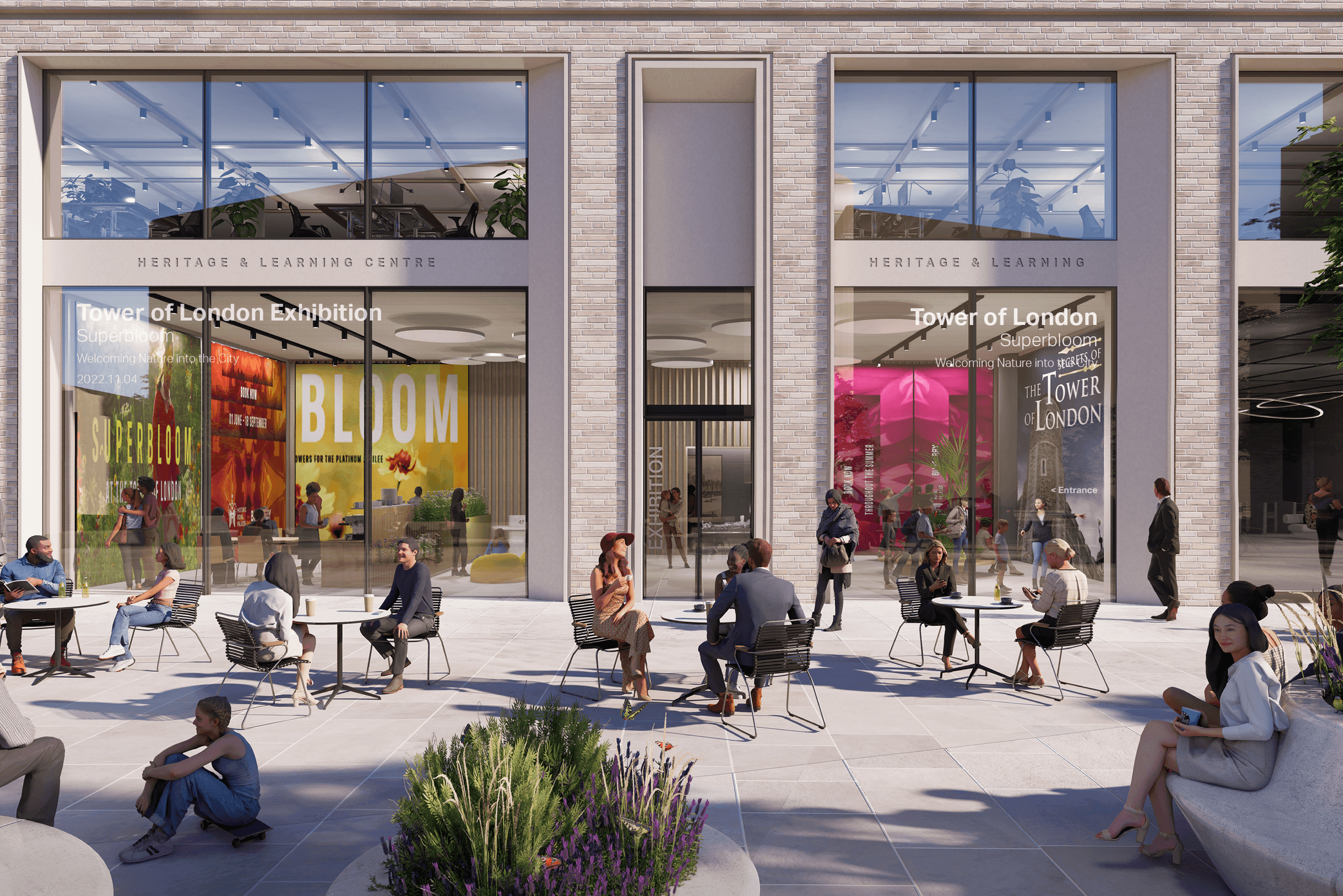
47–50 Mark Lane proposes a contemporary workplace development that responds to the heritage, character, and urban context of this unique location within the City of London. The work presented formed part of the Planning Submission and Design & Access Statement for the project. The proposed building will deliver over 20,000 sqm of office space, situated among some of London’s most historically significant landmarks, including the Tower of London, All Hallows-by-the-Tower, and Trinity Square. Within this sensitive setting, the project aims to repair and enhance the surrounding urban fabric while improving the spatial relationship between the site and these important heritage assets.
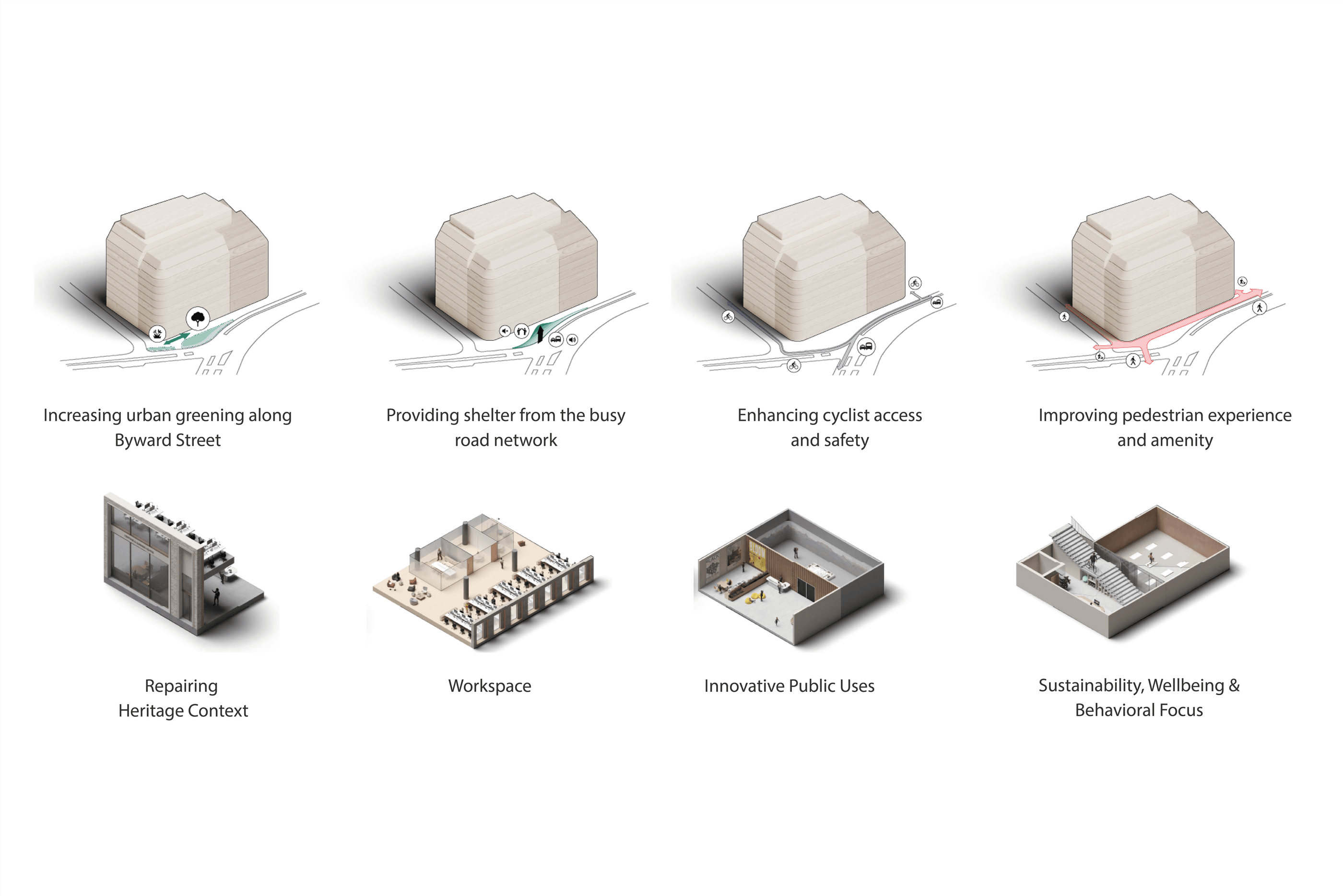
A key component of the proposal is the reimagining of the surrounding public realm. The development introduces significant improvements in urban greening, active street frontages, retail opportunities, cycling infrastructure, and accessibility. These interventions are designed to enrich the experience for both building users and the wider public, strengthening the connection between the workplace and the city. While the building primarily functions as a flexible, high-quality office environment, the ground floor is designed as an active and publicly engaging layer. It incorporates new retail spaces, the relocation of a public house, and an innovative cultural facility — the Centre for Heritage Learning and Culture — creating opportunities for education, engagement, and community interaction.
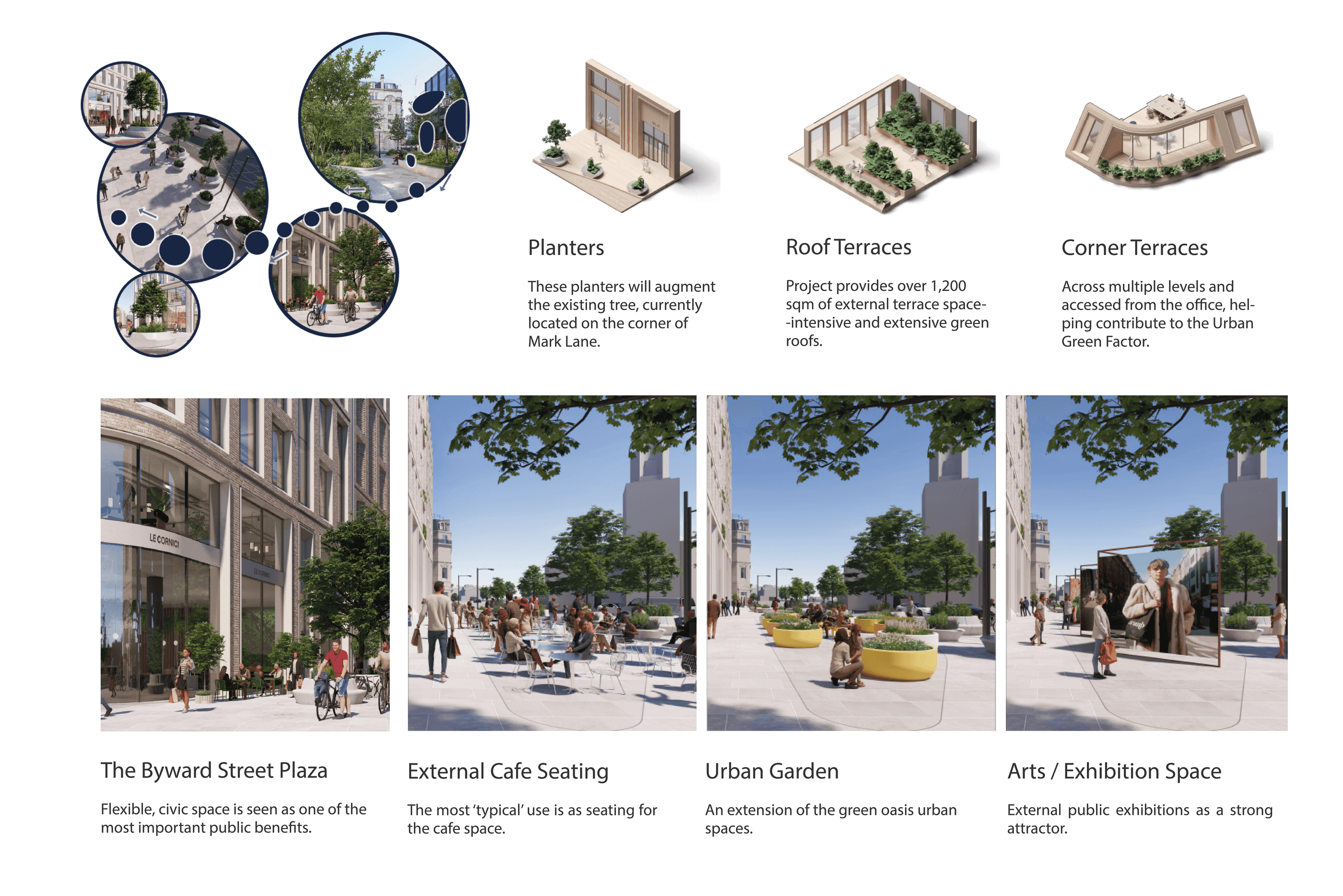
The proposal includes a comprehensive redesign of the adjacent public spaces, responding to the site’s exceptional views and historic context. The public realm strategy draws inspiration from the character of the nearby Seething Lane Gardens. The design interprets the gardens’ organically shaped raised planters and extends this landscape language through Seething Lane Passage and toward Byward Street, creating a cohesive sequence of green public spaces. These interventions enhance biodiversity, soften the urban environment, and provide welcoming outdoor areas within the dense city fabric.
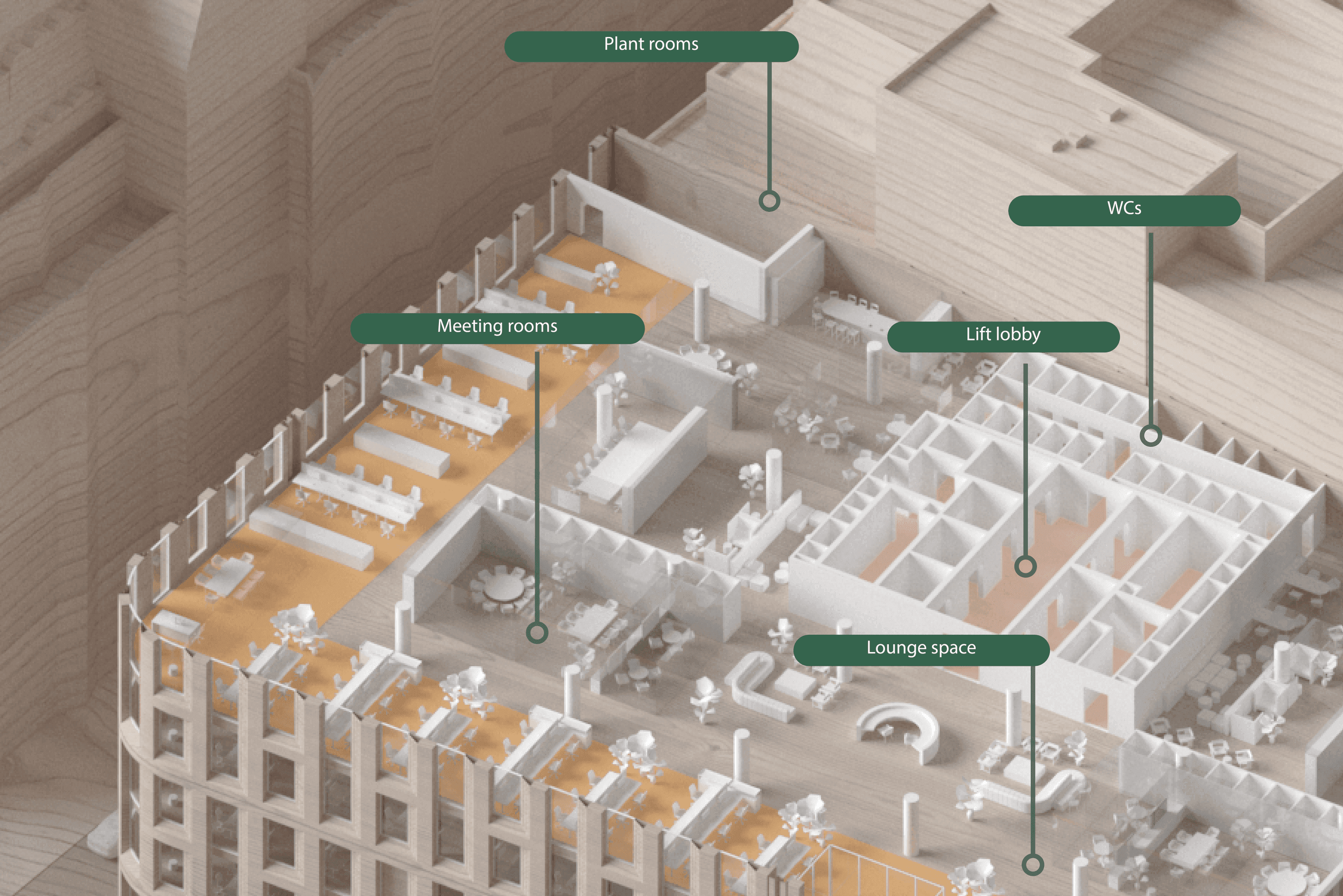
The building provides large, flexible floorplates capable of accommodating a wide range of office typologies. The spatial design principles ensure the building has strong and adaptable structural foundations, allowing the workplace environment to evolve over time. This flexibility supports the changing nature of office work and allows the building to adapt to potential future uses as the needs of the surrounding area develop.
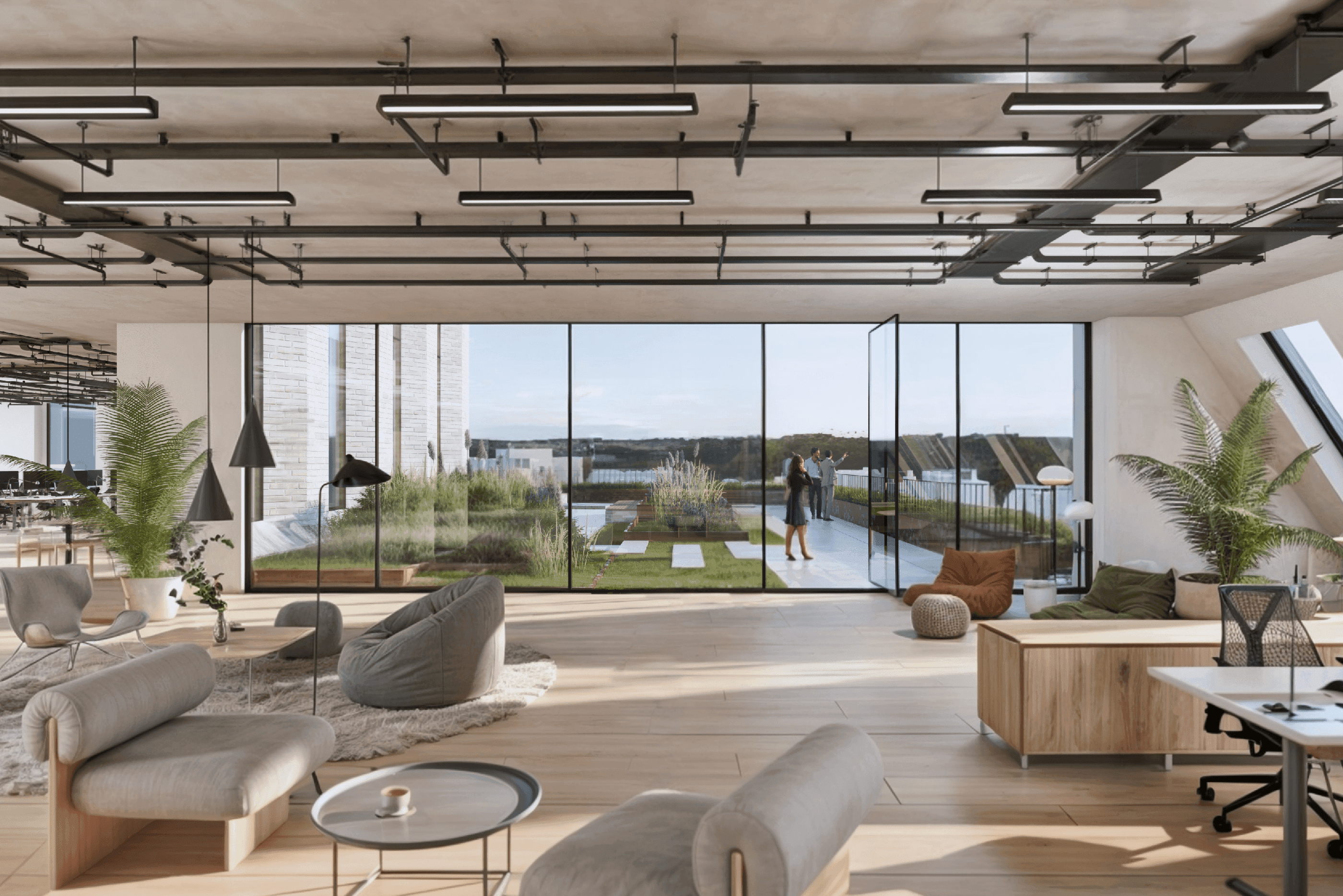
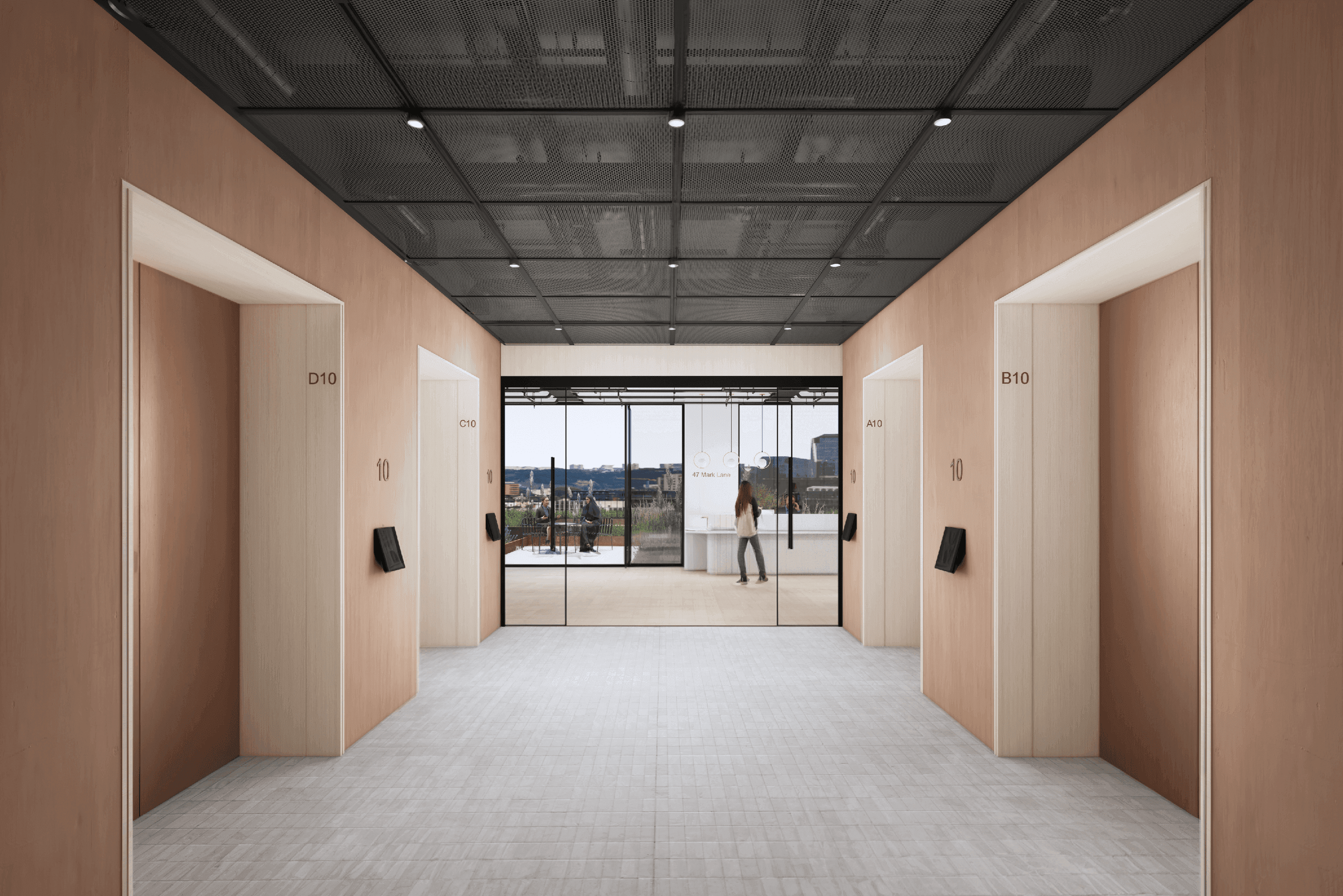
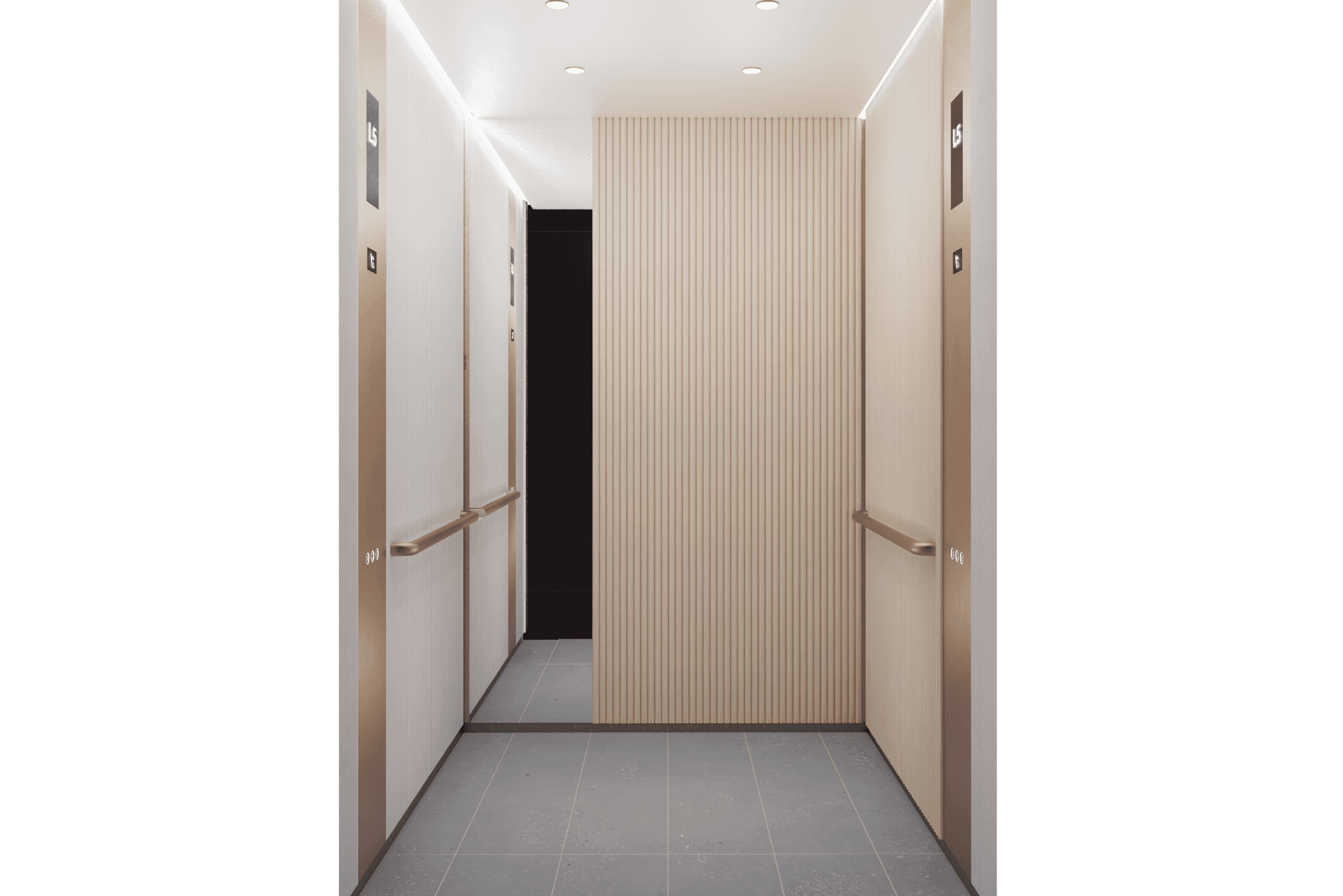
Complementing the office spaces is a diverse range of internal and external amenity areas. Most floors benefit from access to outdoor terraces, creating opportunities for informal meetings and moments of relaxation. The upper three storeys feature expansive green terraces that offer exceptional panoramic views of the surrounding City of London, providing high-quality outdoor environments for building users.
The development promotes sustainable and active modes of transport by providing clearly defined entrances for both pedestrians and users arriving via active travel, such as cyclists and runners. These entrances are positioned adjacent to one another, establishing an inclusive and balanced approach to building access.
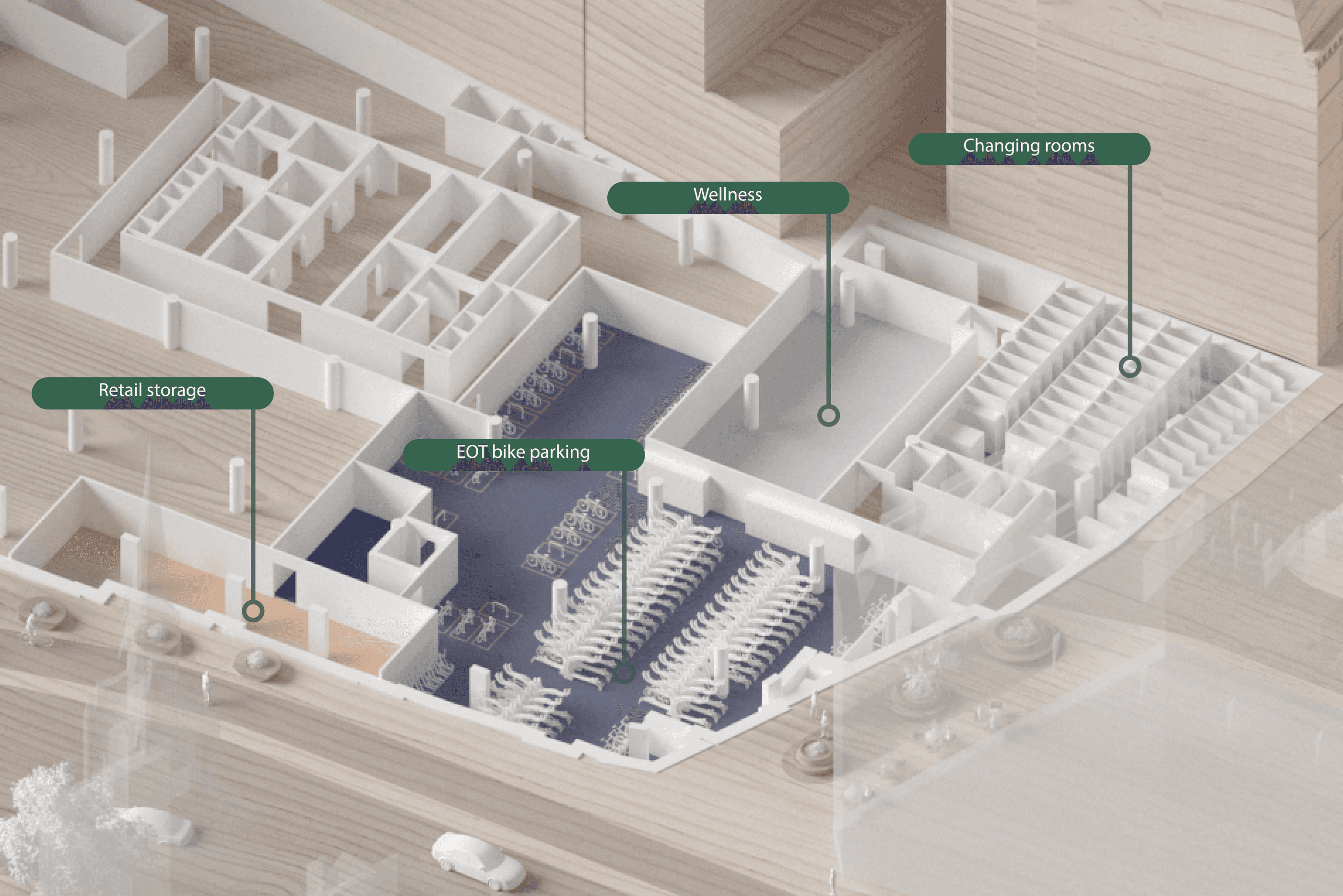
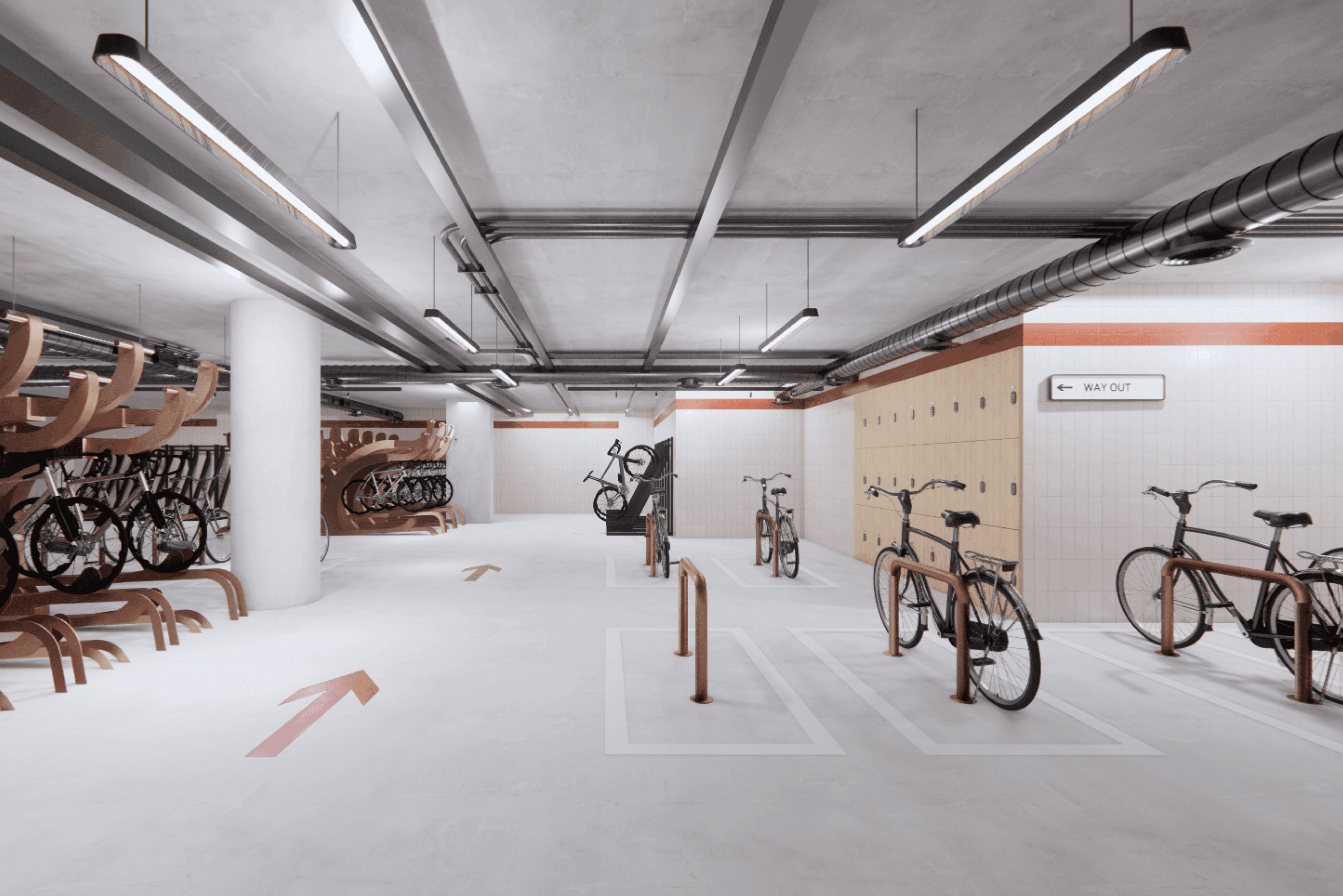
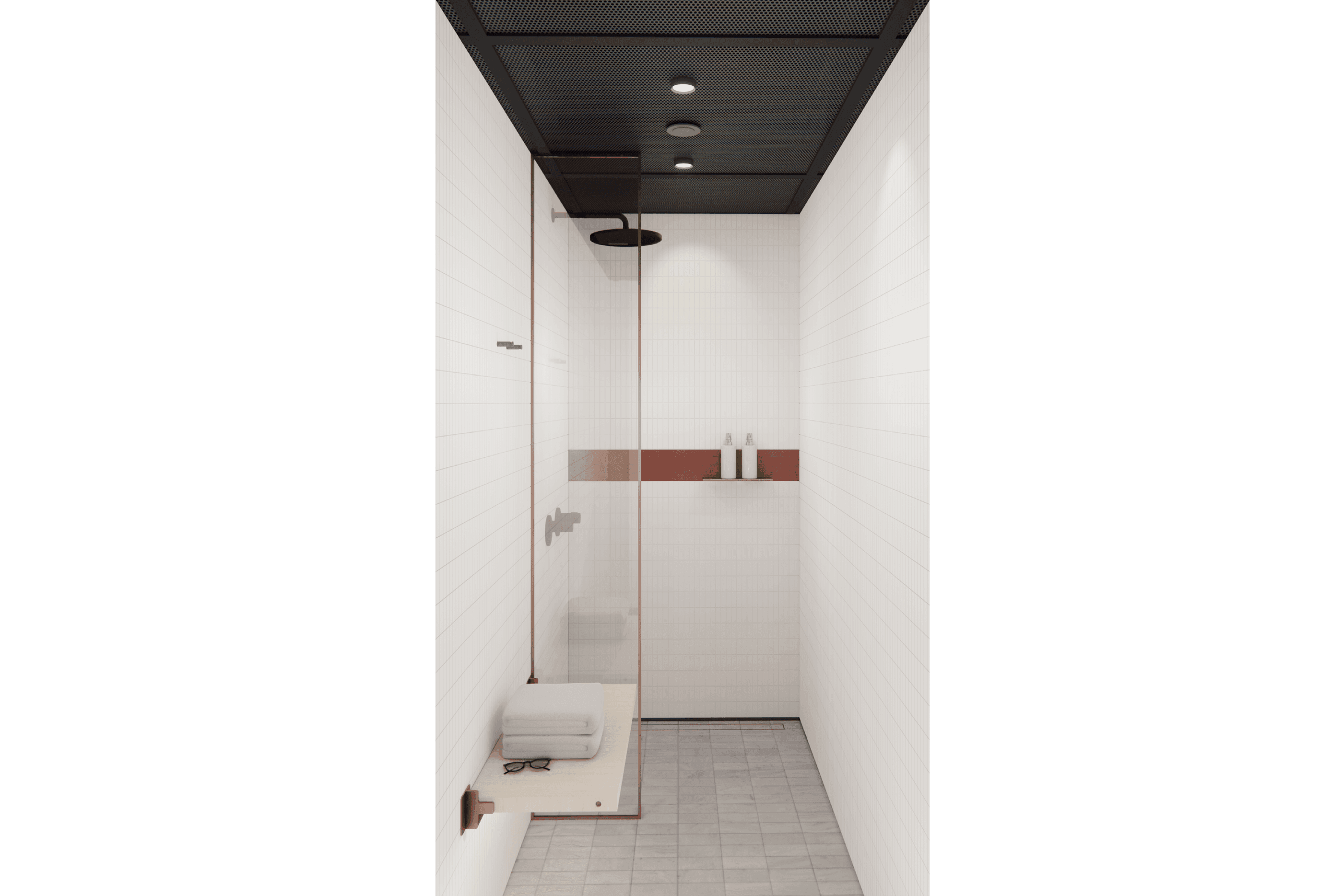
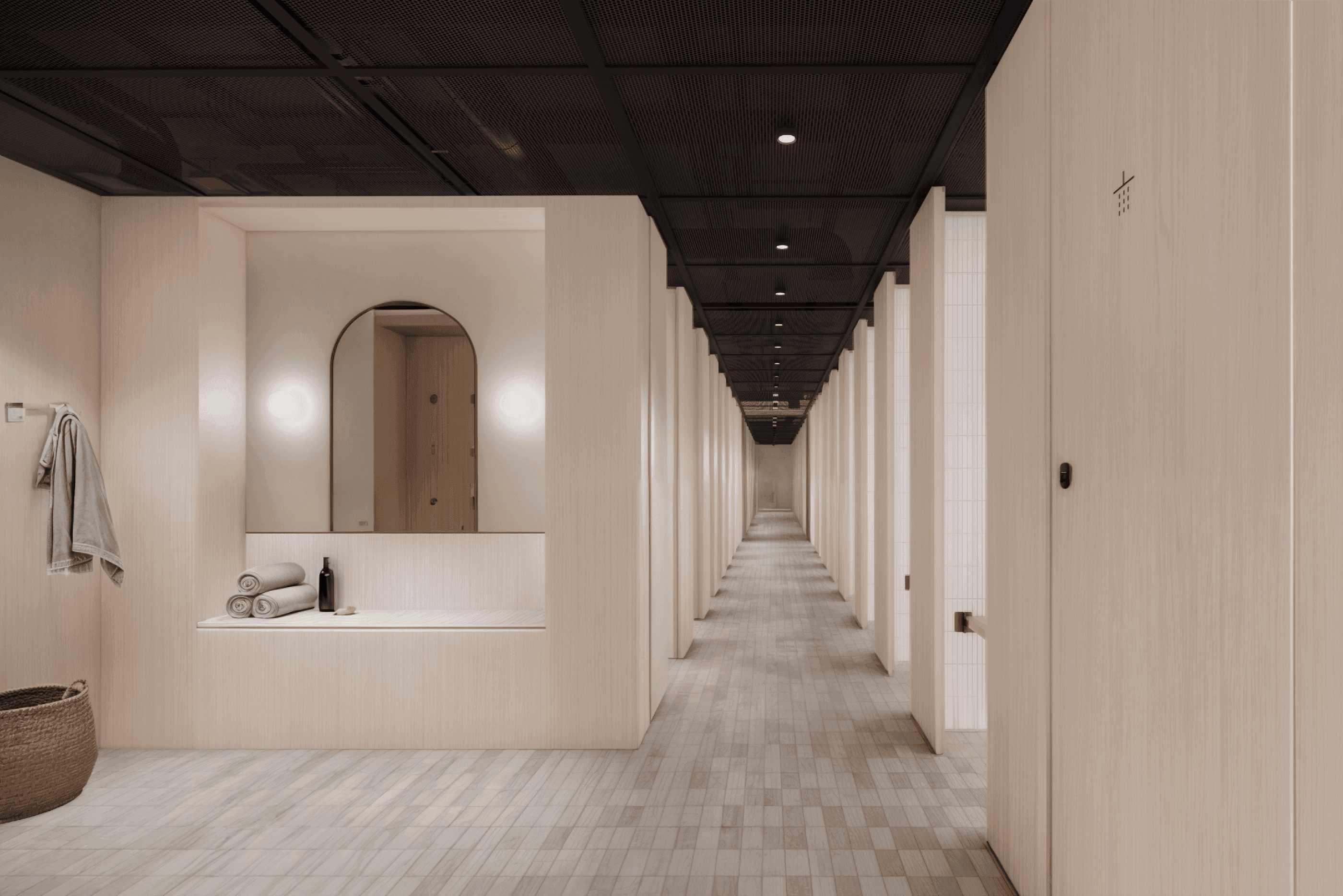
Long-stay cycle parking is located within the basement of the development and is easily accessible from the main entrance. In close proximity to the cycle facilities is a dedicated Wellness Centre. The space includes a full suite of changing rooms and amenities designed to hospitality standards, ensuring a comfortable and convenient experience.