Slow Collective
Master's Thesis
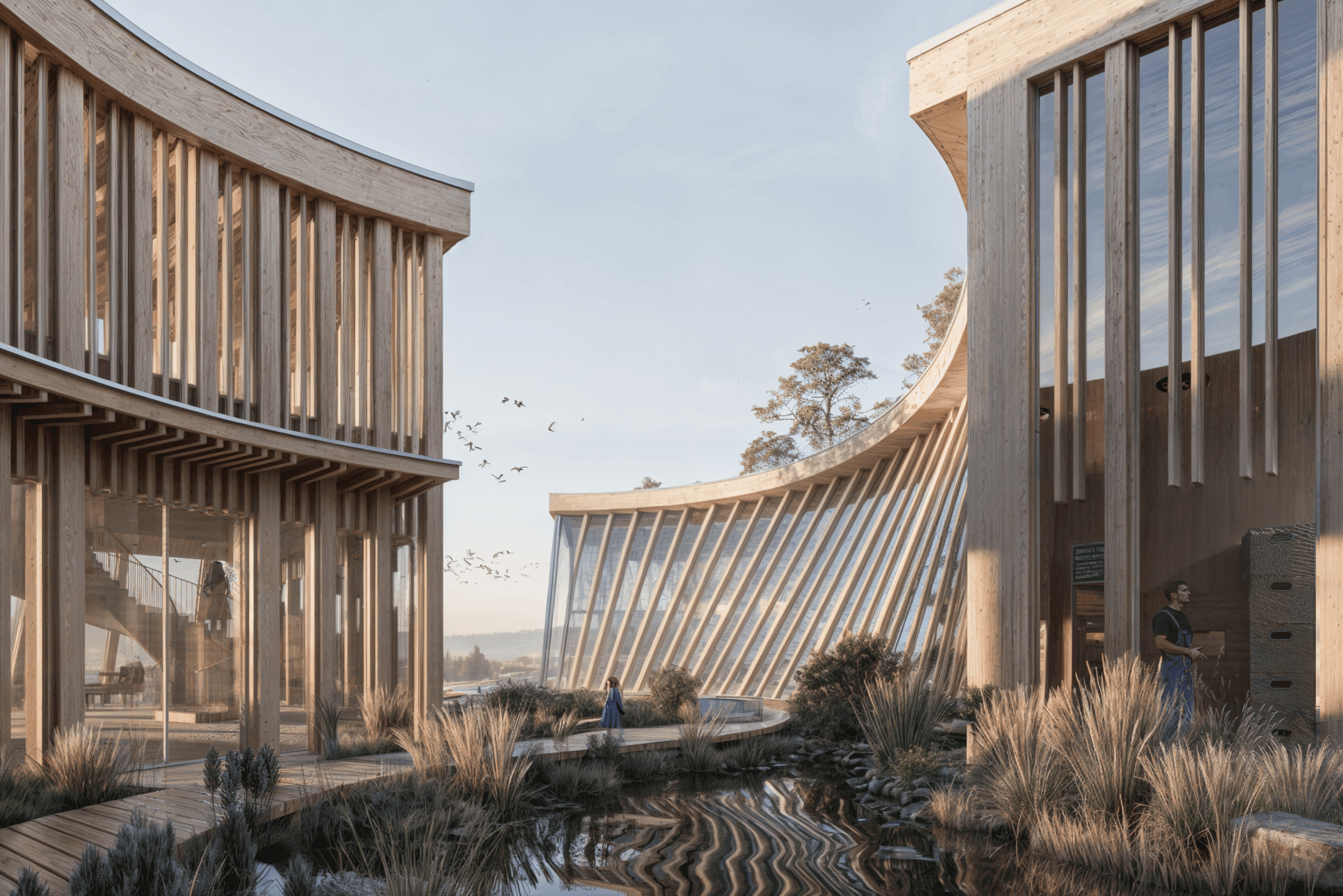
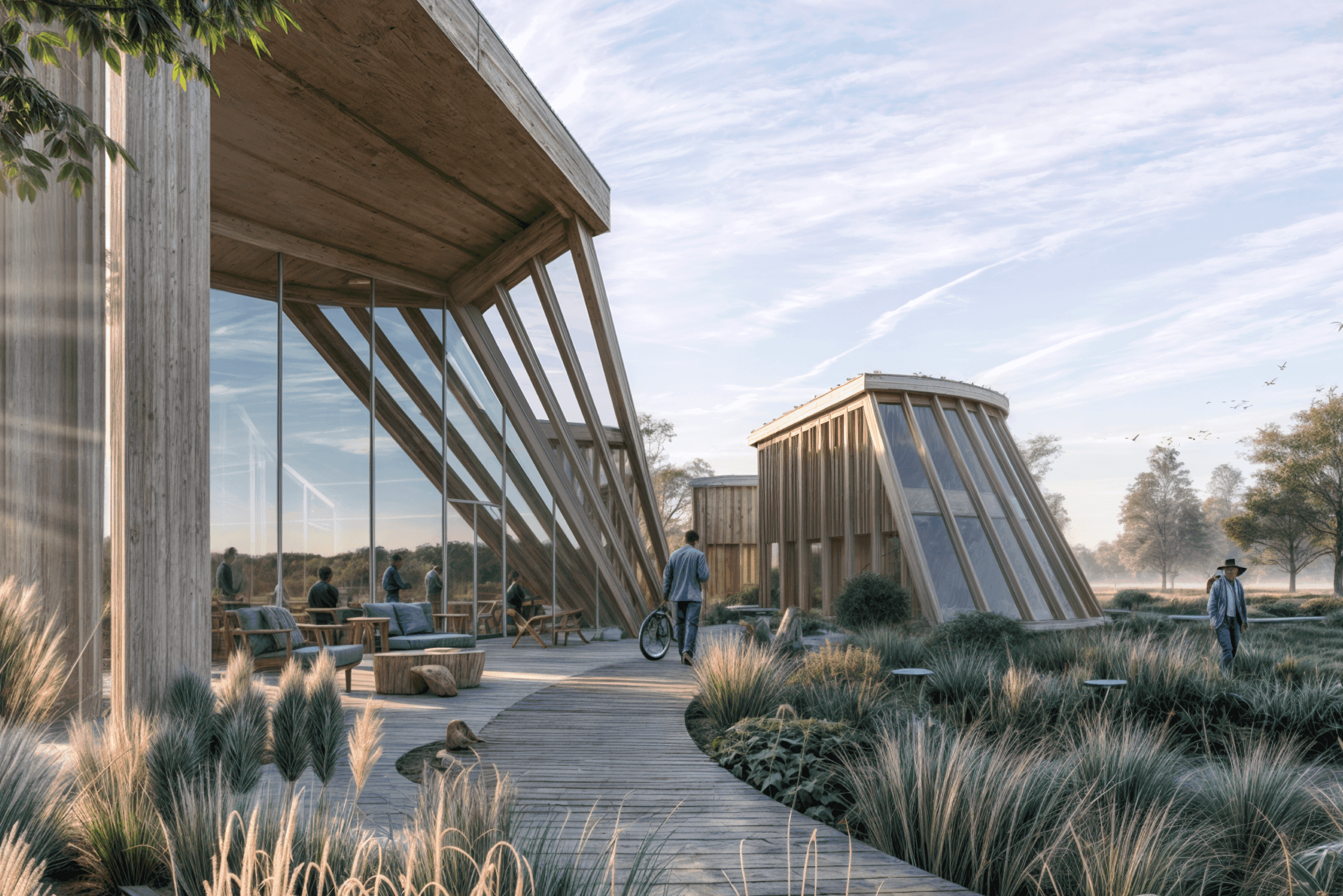
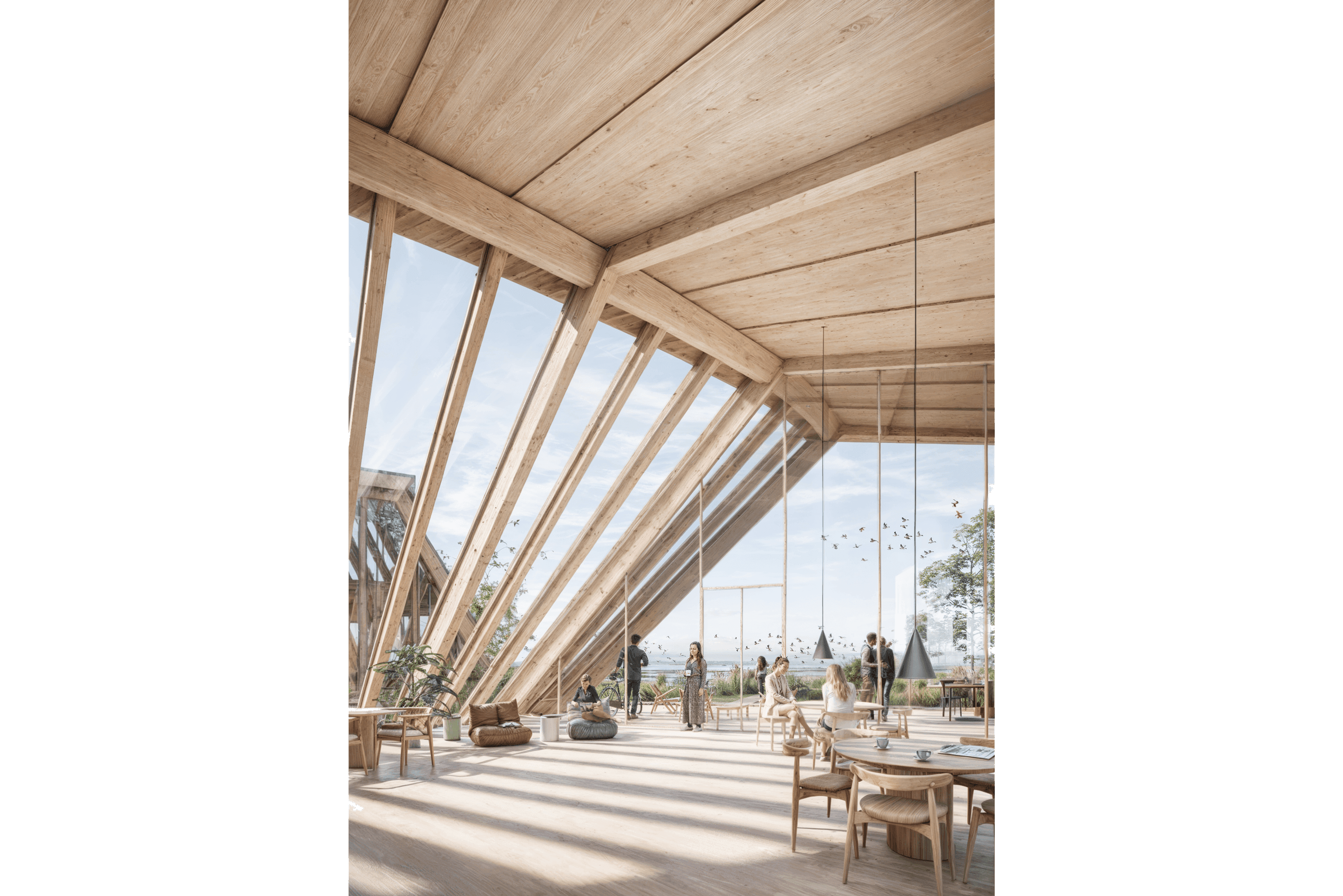
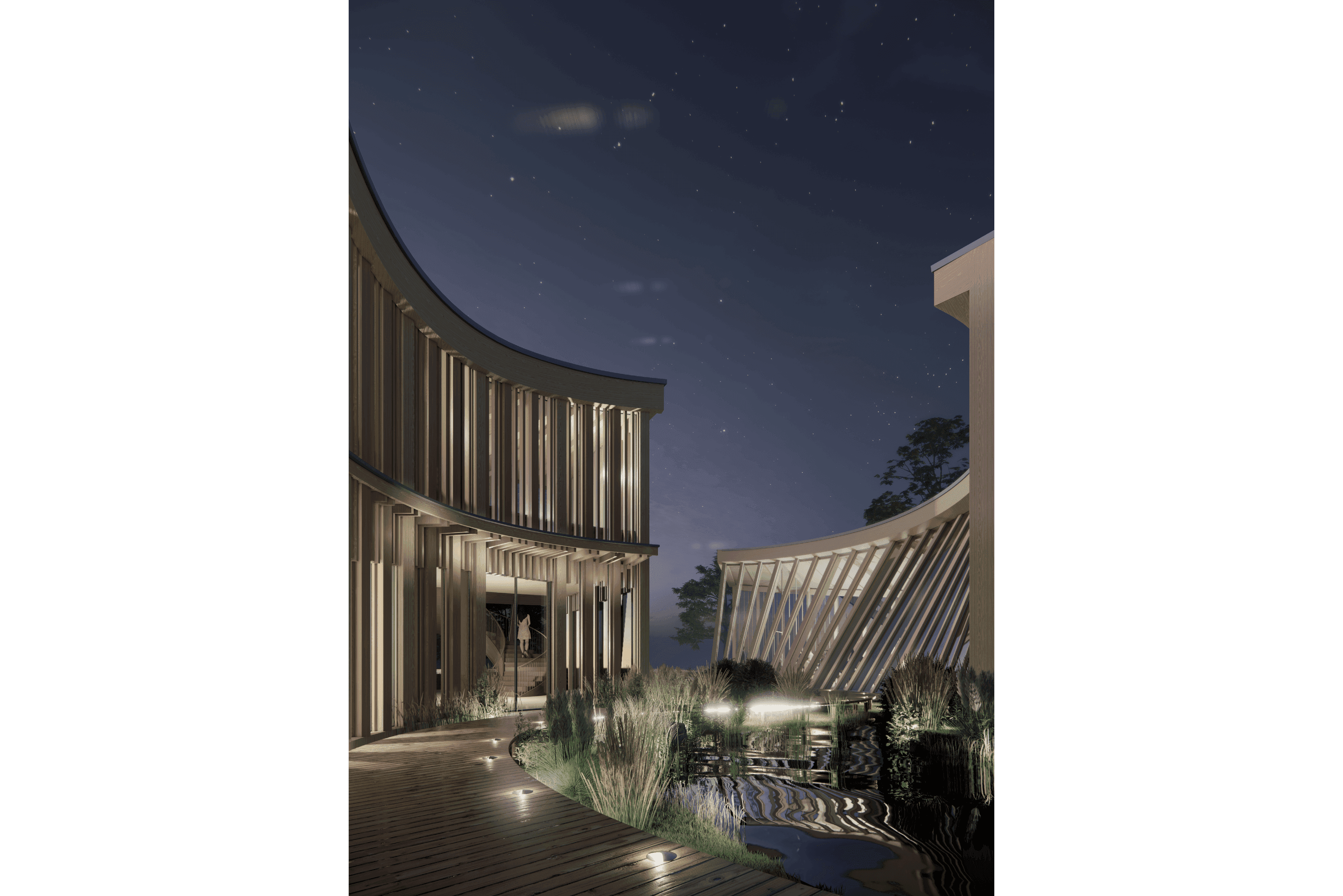
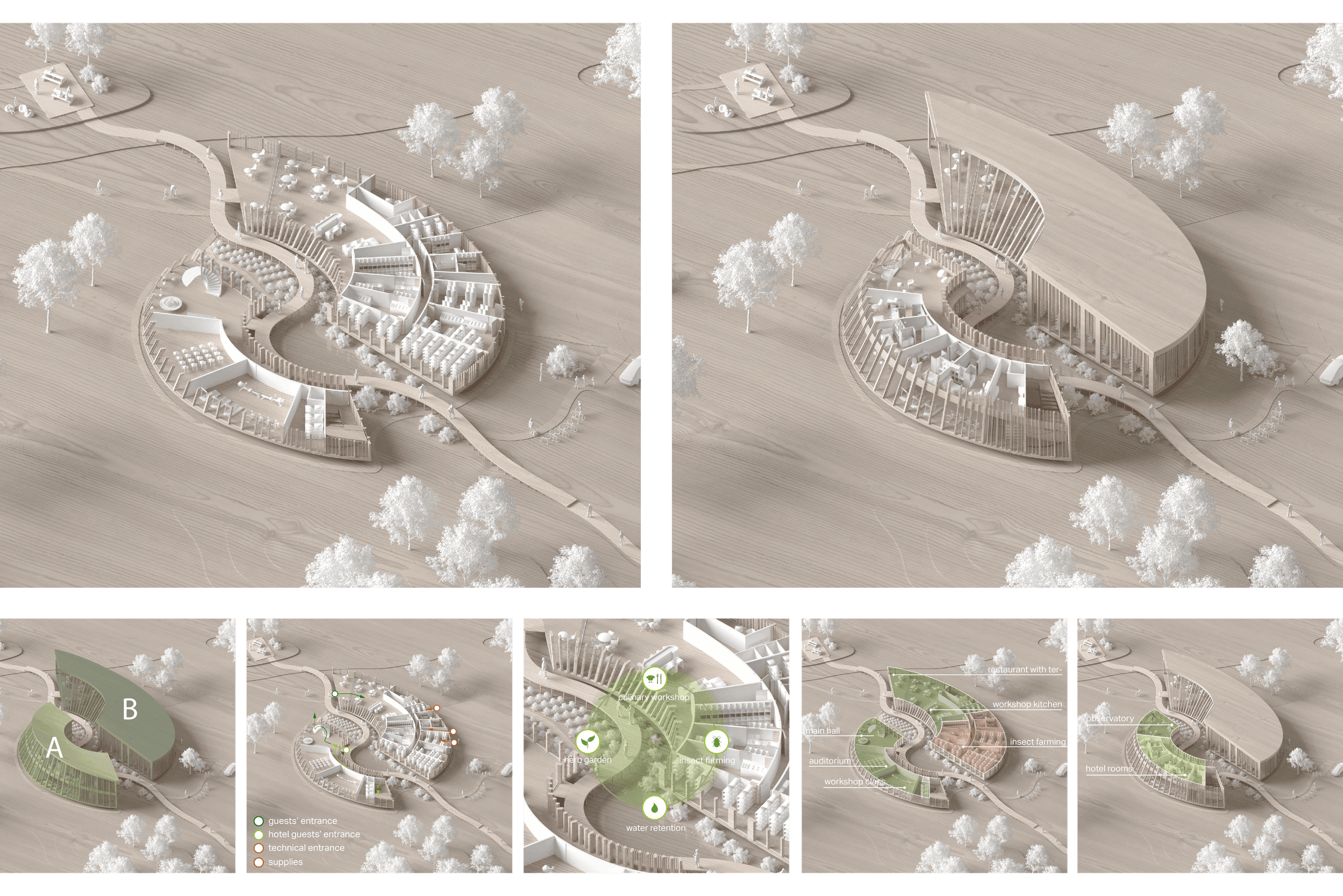
Slow Collective in Kopice is a multifunctional facility integrating mealworm breeding and processing, gastronomy, and ecotourism. The project investigates the potential for a symbiotic relationship between humans and nature, aiming to shape spatial experiences while developing long-term regenerative solutions that highlight nature’s essential role in human well-being.
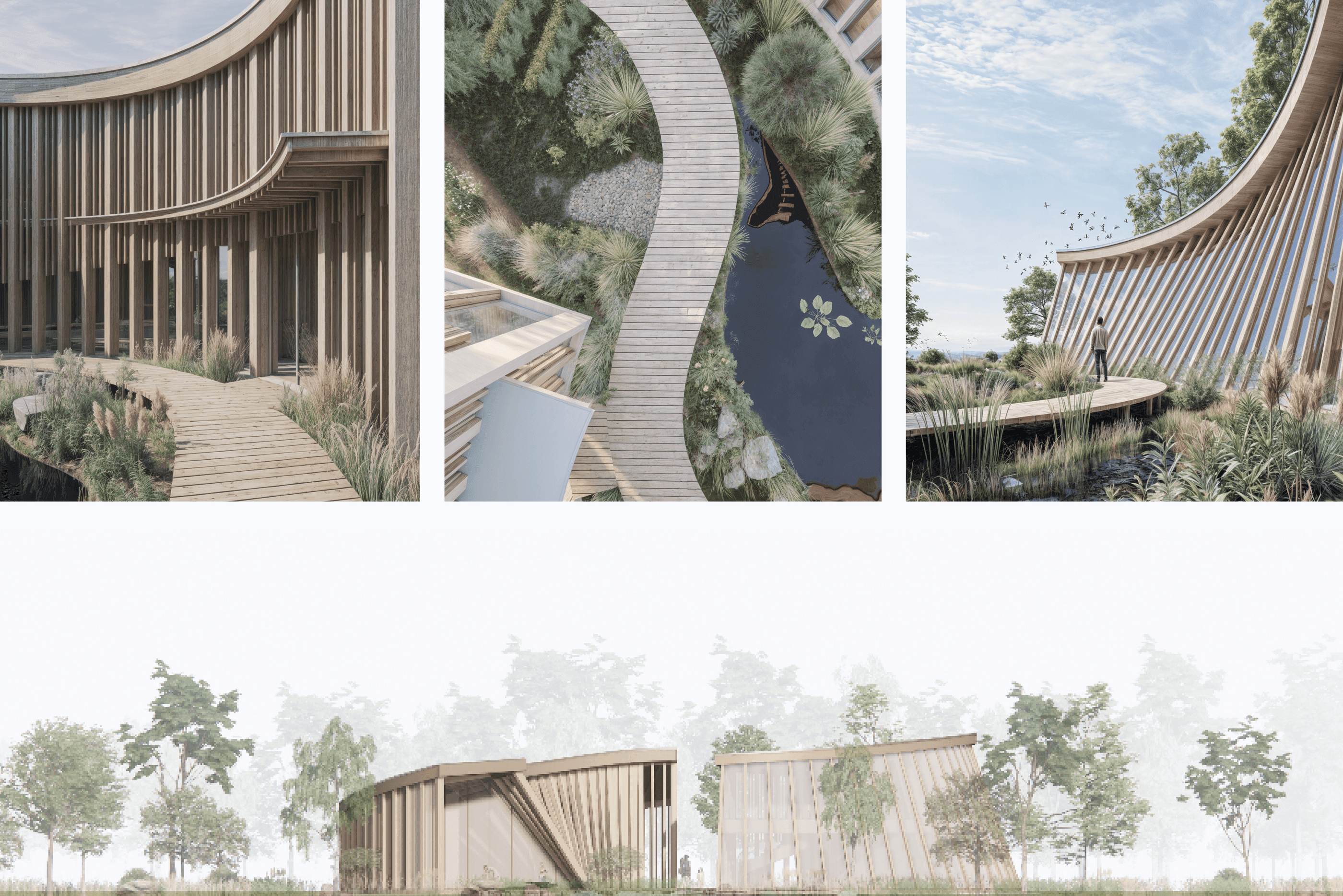
The design is grounded in environmentally responsible strategies that create circular systems, optimize energy consumption, and utilize renewable natural resources. The project incorporates various sustainable technologies, including circular construction principles, biodiversity enhancement, and rational resource management.
A key design priority is minimizing the environmental impact of the surrounding infrastructure. Locally sourced materials—such as small stones, sand, and gravel—are used for landscape interventions, while the number of pathways and embankments is deliberately reduced to preserve the natural terrain and ecological balance.
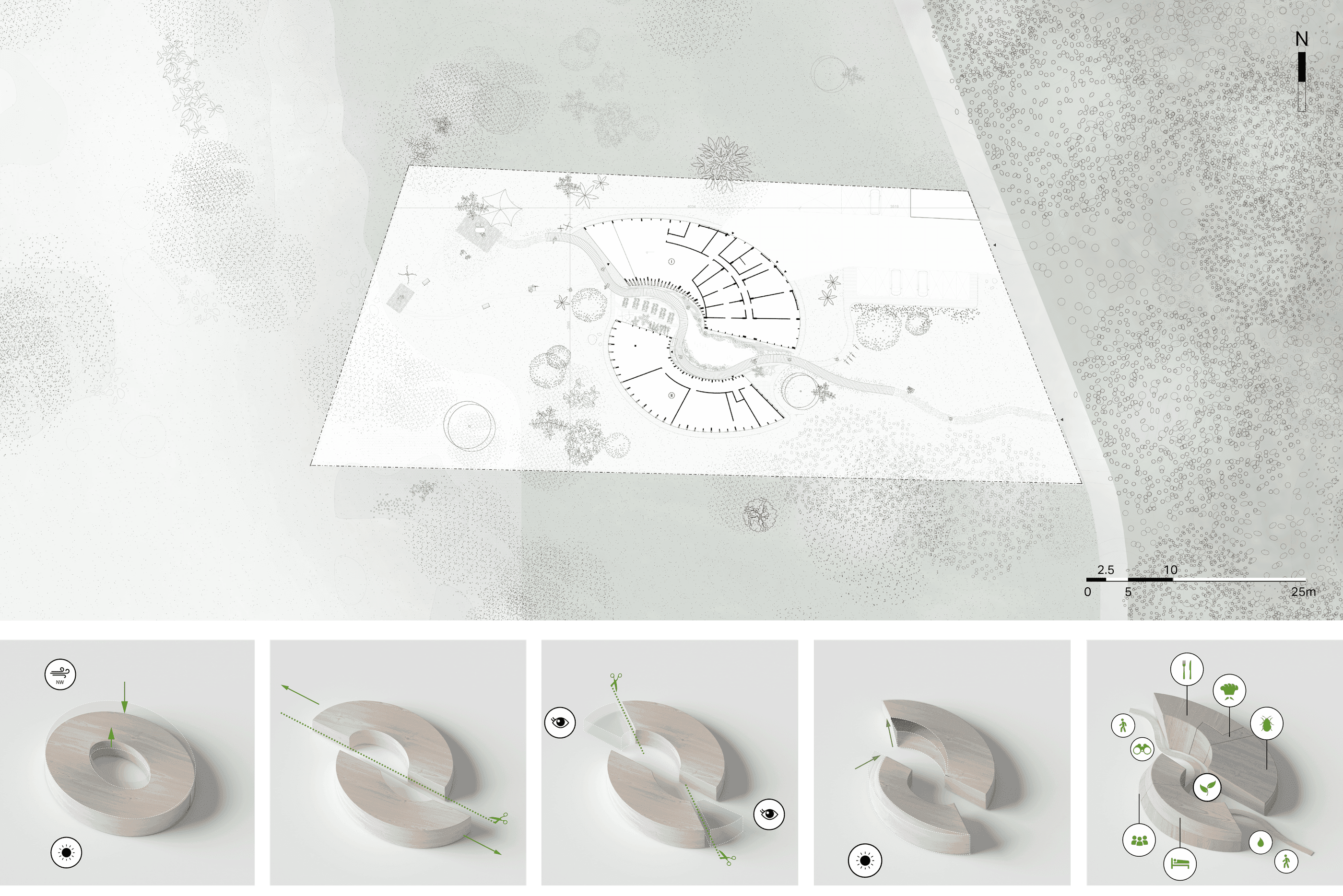
The architectural concept draws inspiration from the dynamic behavior of coastal dunes and their characteristic response to wind, forming along natural axes. This idea is translated into the design through a central footbridge that acts as the primary spatial axis, connecting and organizing the entire structure.
Nature is understood as a fundamental source of human health and a catalyst for a balanced lifestyle. The building seeks to embody this vitality by creating diverse sensory experiences and strong biophilic connections between interior spaces and the surrounding landscape. Just as natural systems adapt to changing conditions, the architecture is conceived as resilient and flexible, allowing for future transformation.
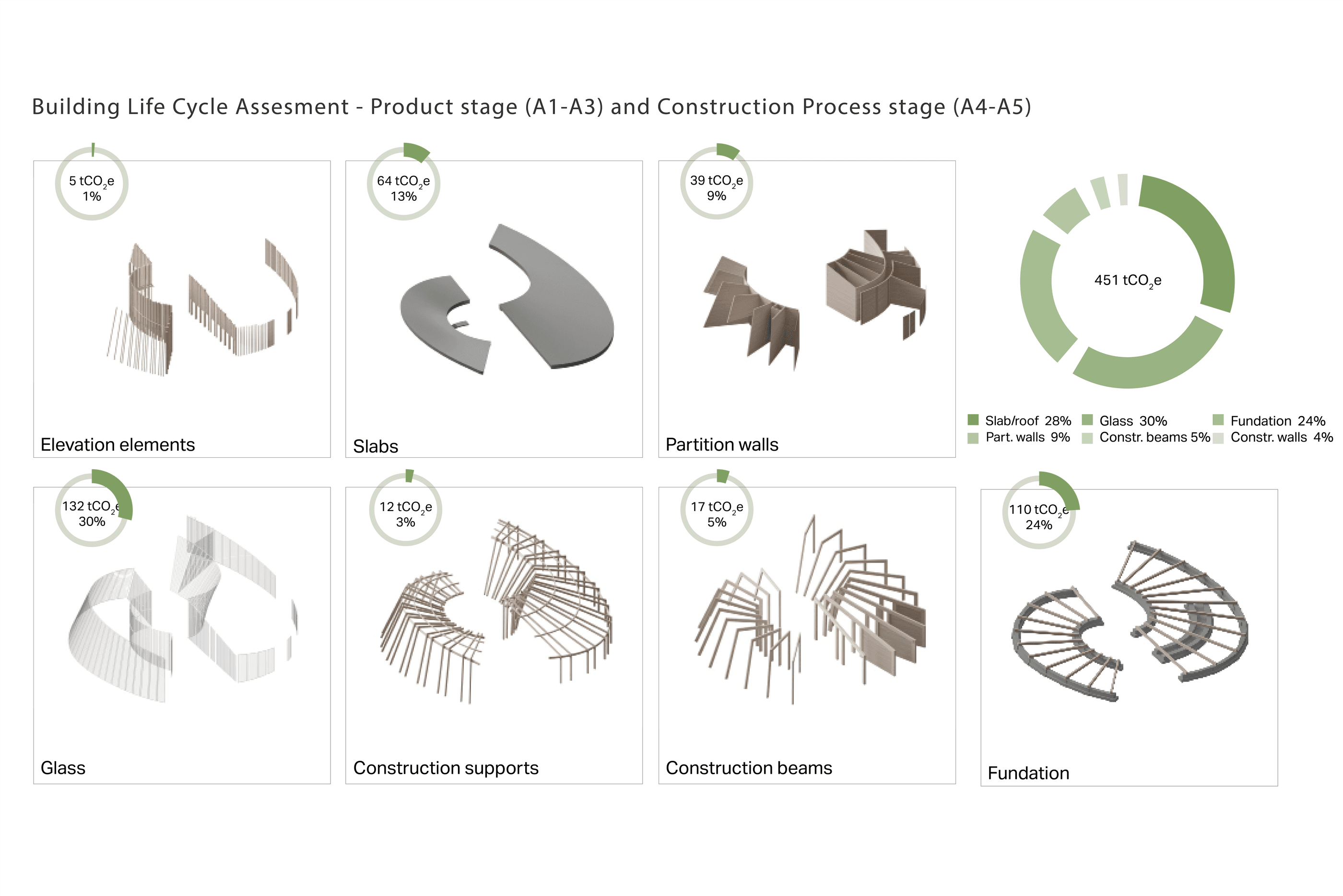
The construction strategy also follows the principle of a closed resource loop, minimizing the building’s carbon footprint and supporting sustainable practices throughout its lifecycle.
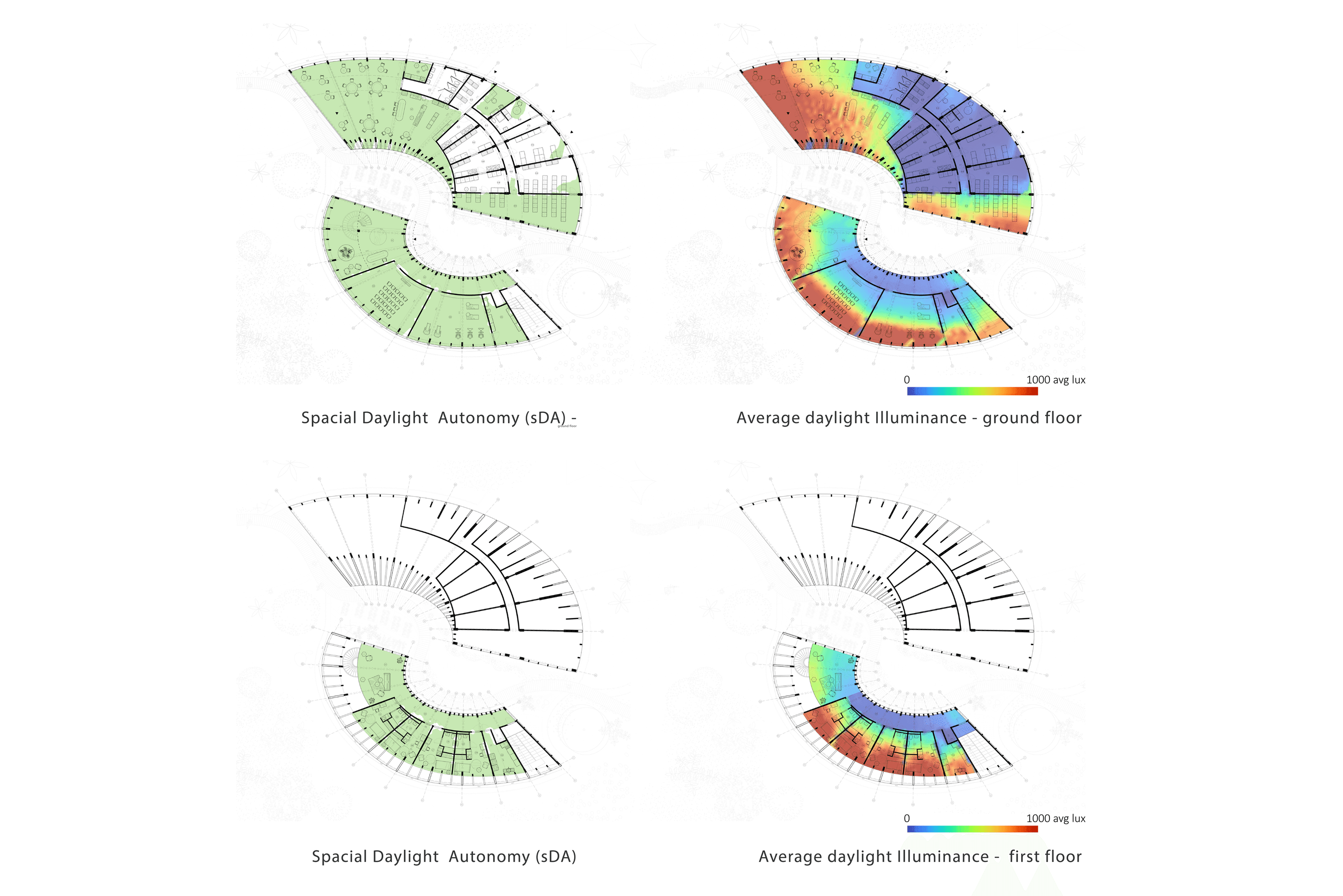
A daylight simulation was conducted to evaluate how effectively natural light illuminates the interior spaces. The analysis focuses on improving visual comfort, energy efficiency, and user well-being. Weather data specific to Świnoujście, Poland, including solar angles, cloud cover, and seasonal variations, were used to accurately assess daylight availability and its impact on the building’s performance.