Library
Student Project
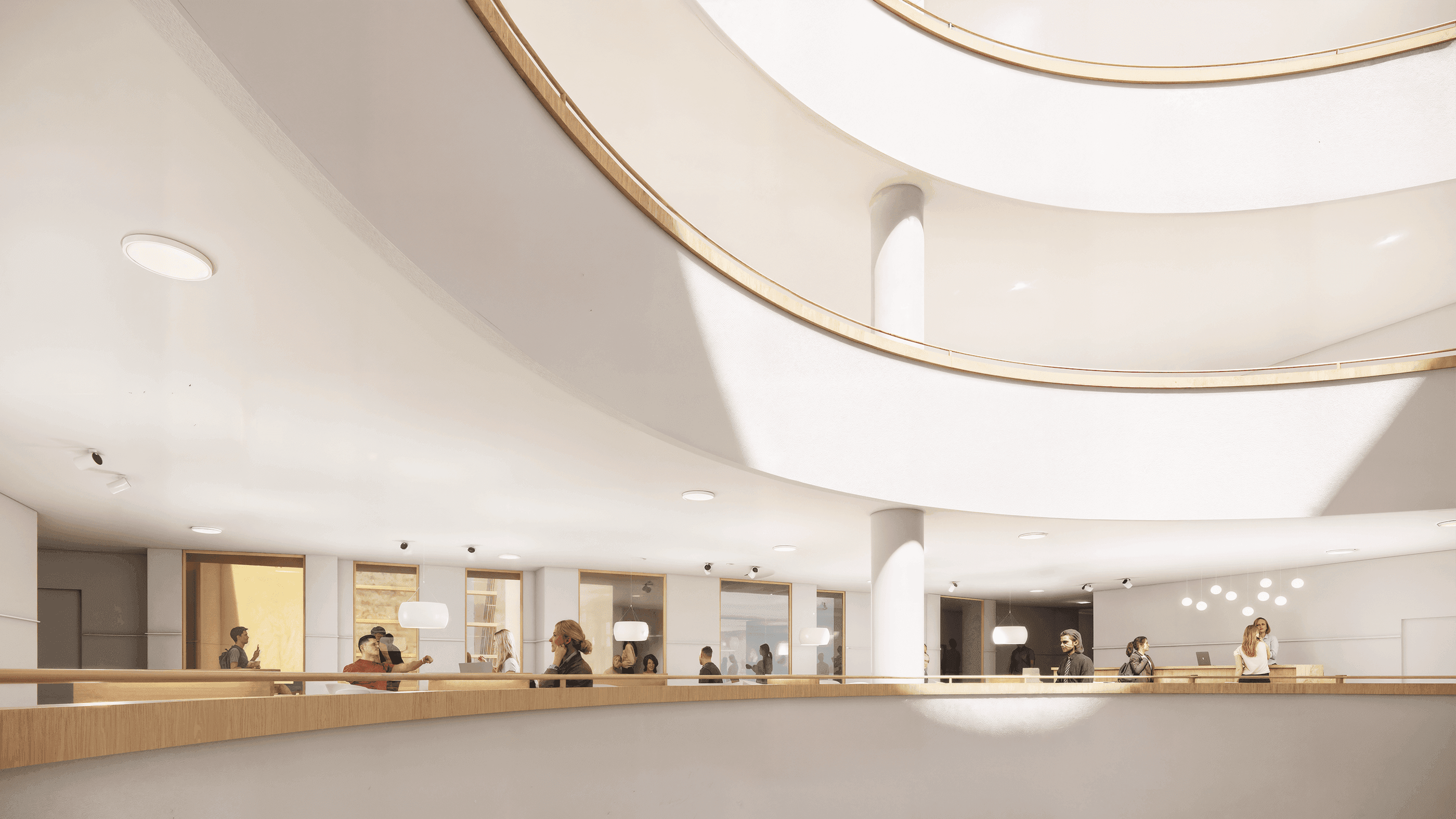
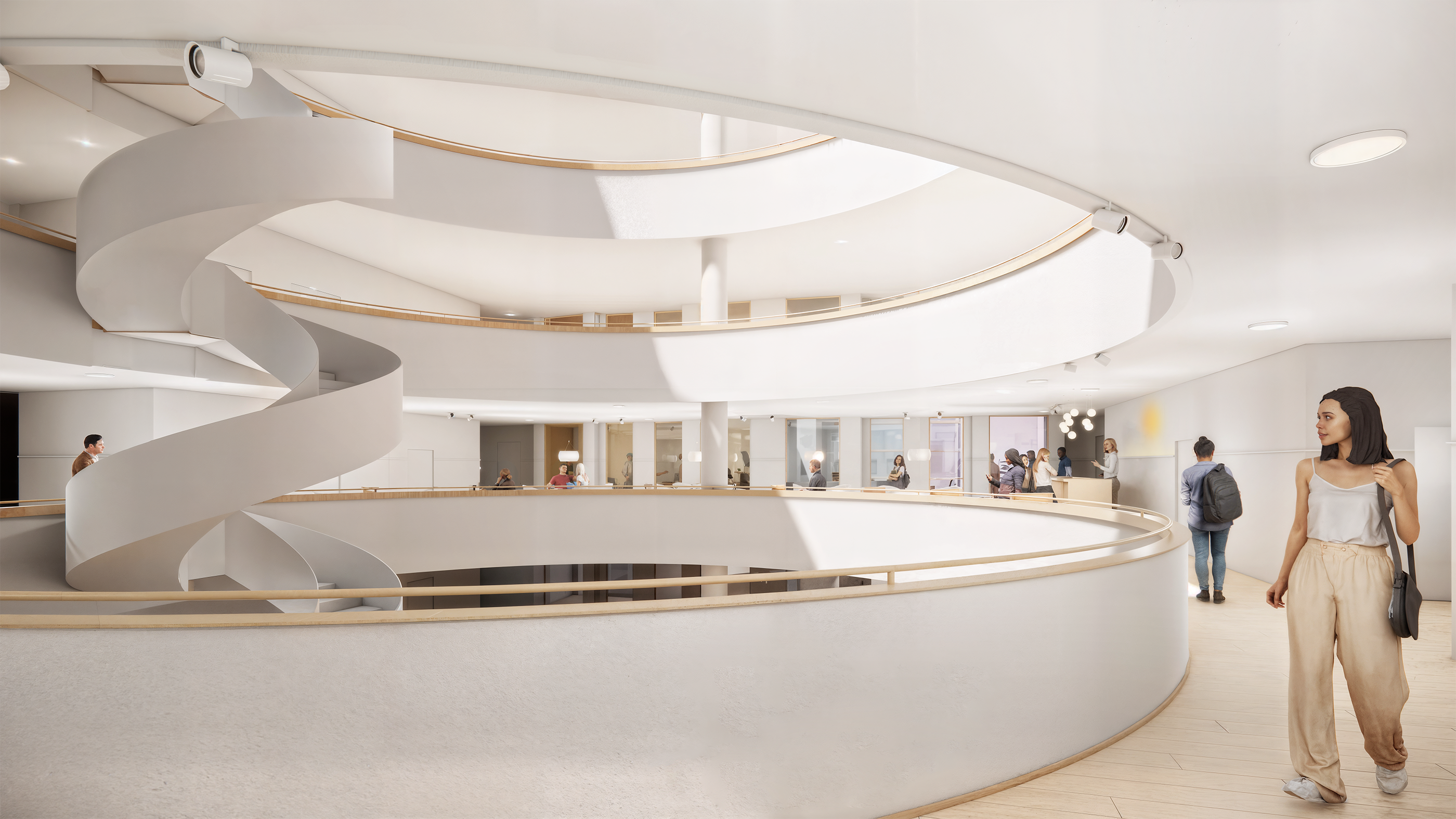
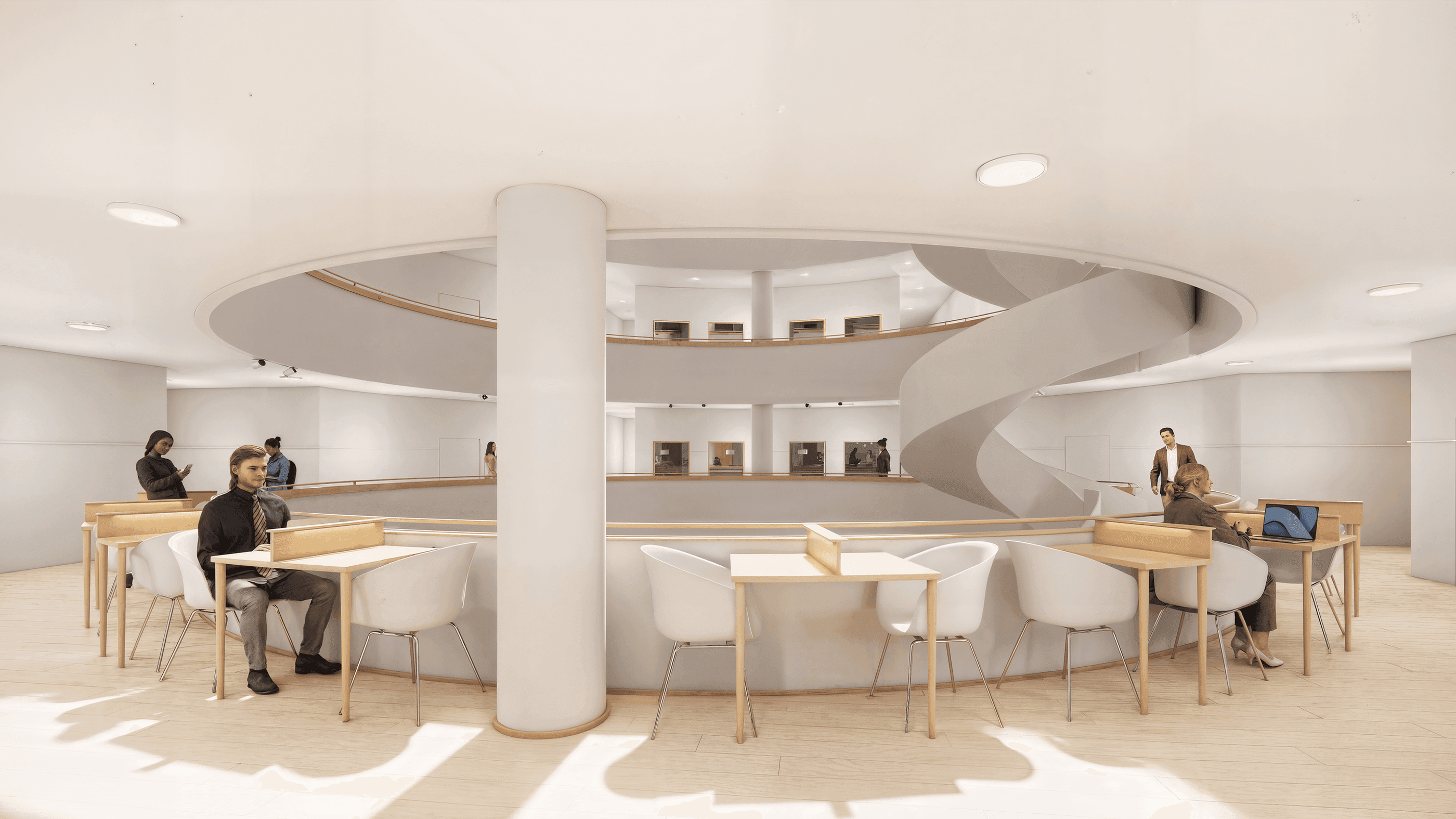
How can a dynamic lighting system, inspired by the principles of sacred architecture, respond to daylight fluctuation and facilitate individual user agency within a collective space?
This semester project explores how lighting design can transform a modern university library into a multifunctional, meaningful, and sustainable learning environment. Focusing on the main library space at Aalborg University Copenhagen, the study investigates how lighting principles of sacred architecture can be translated to support the academic pursuit of knowledge and reflection.
Aims within three design criteria:
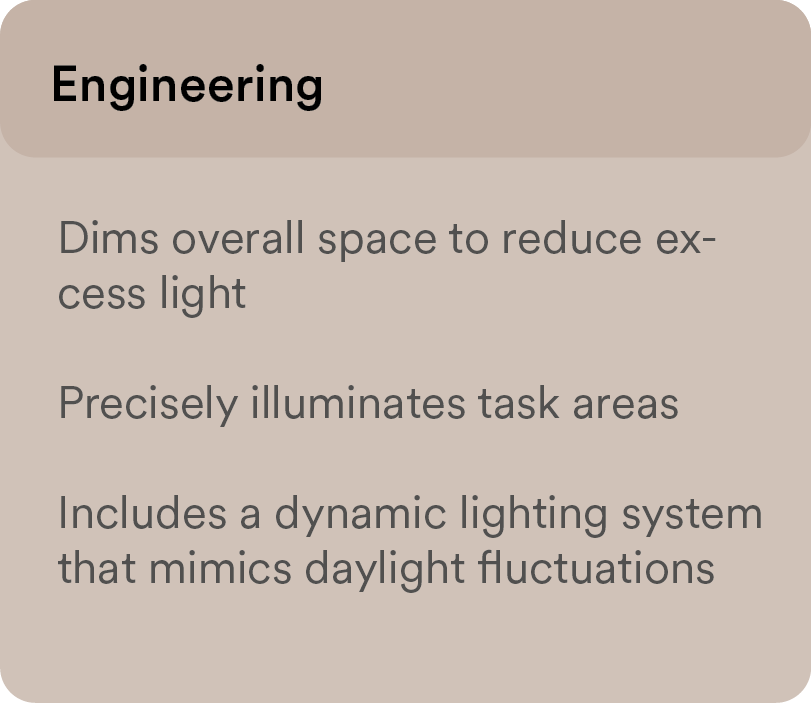
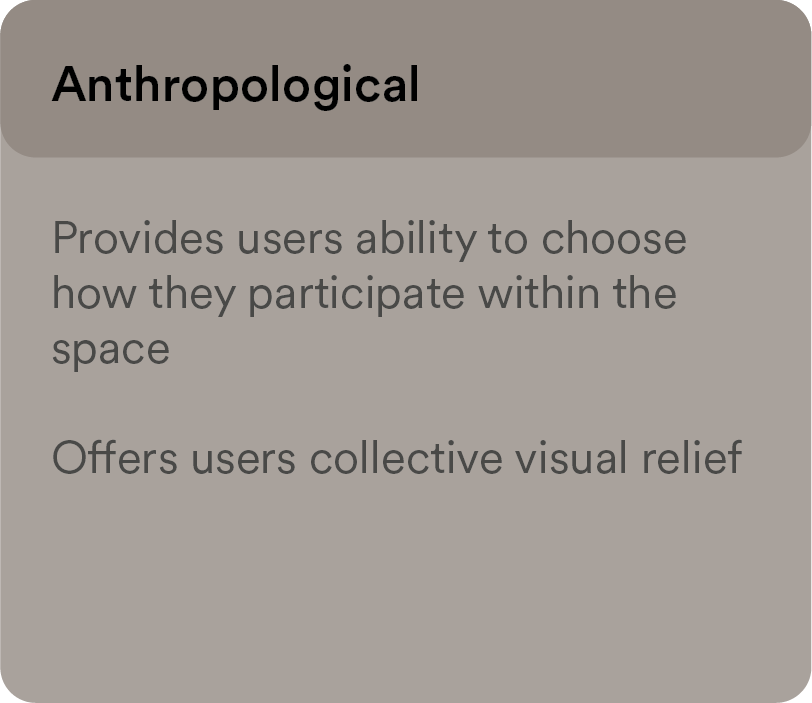
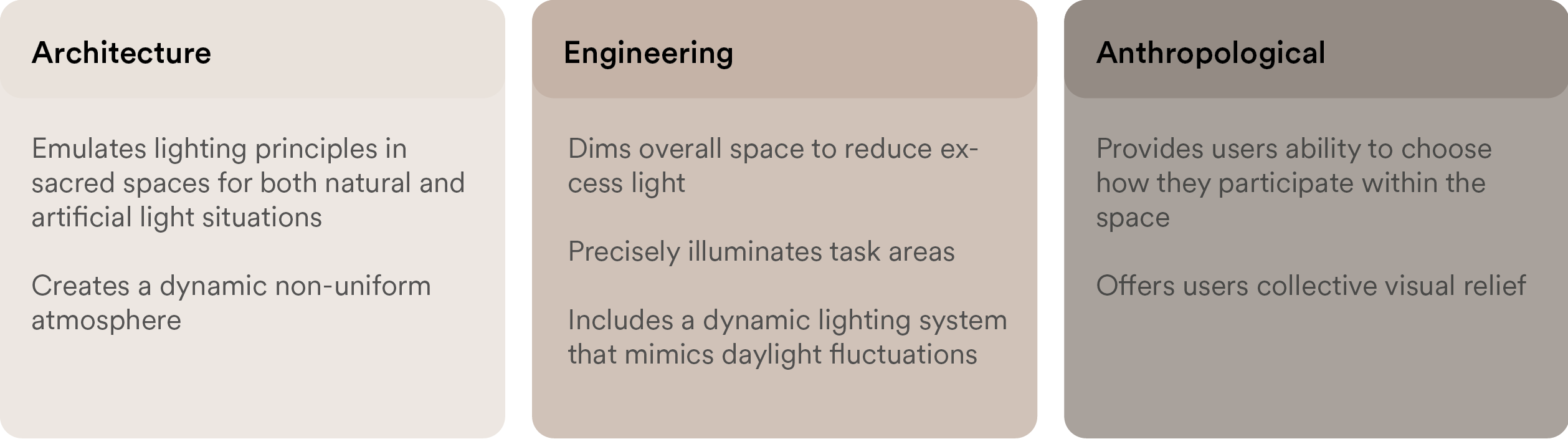
Concept: Light as a Temporal and Experiential Medium
The project interprets light as a dynamic and time-based element that shapes spatial perception, atmosphere, and user experience. Inspired by sacred architecture, the design emphasises the transition between natural and artificial light, creating a continuously evolving environment.

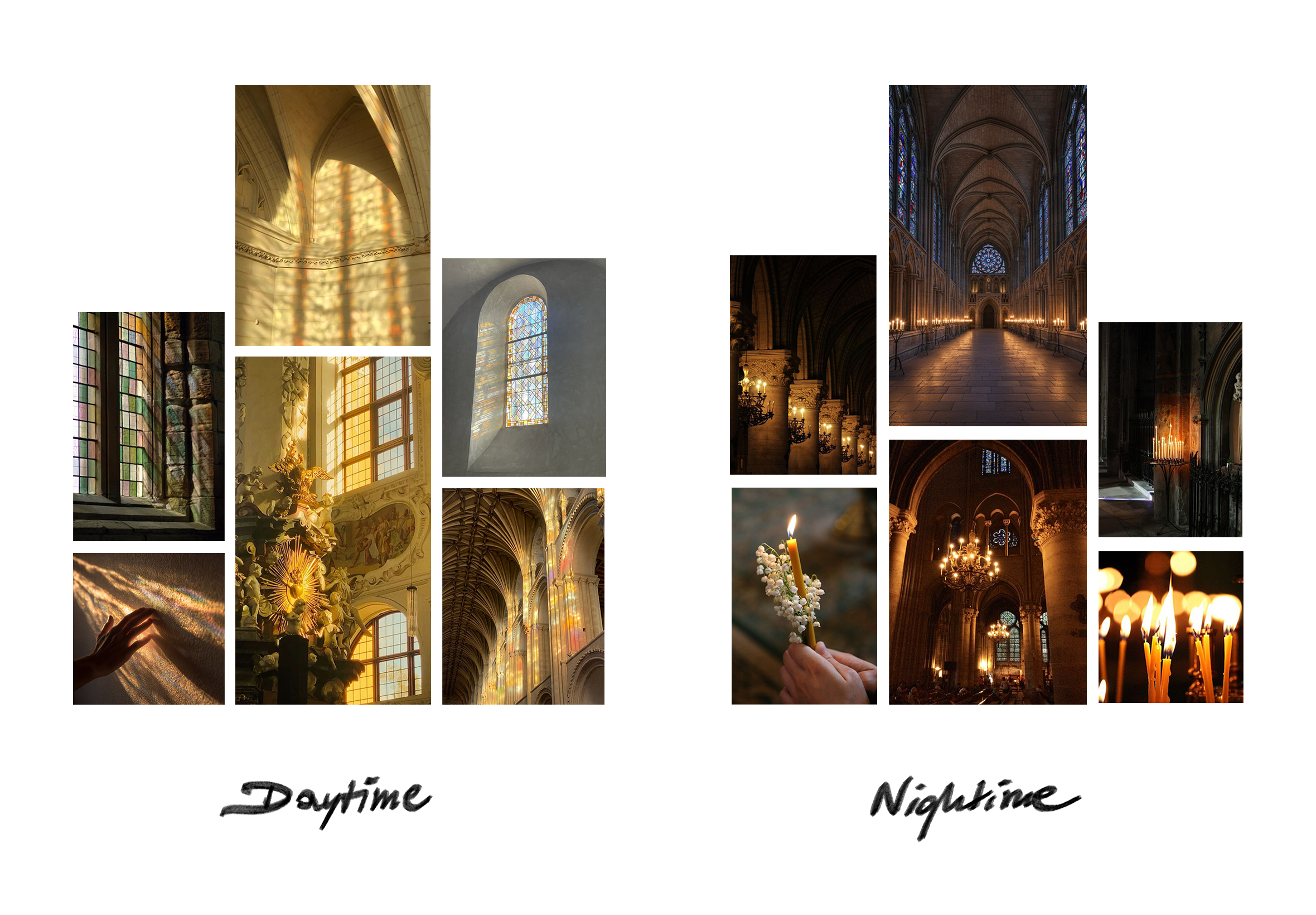
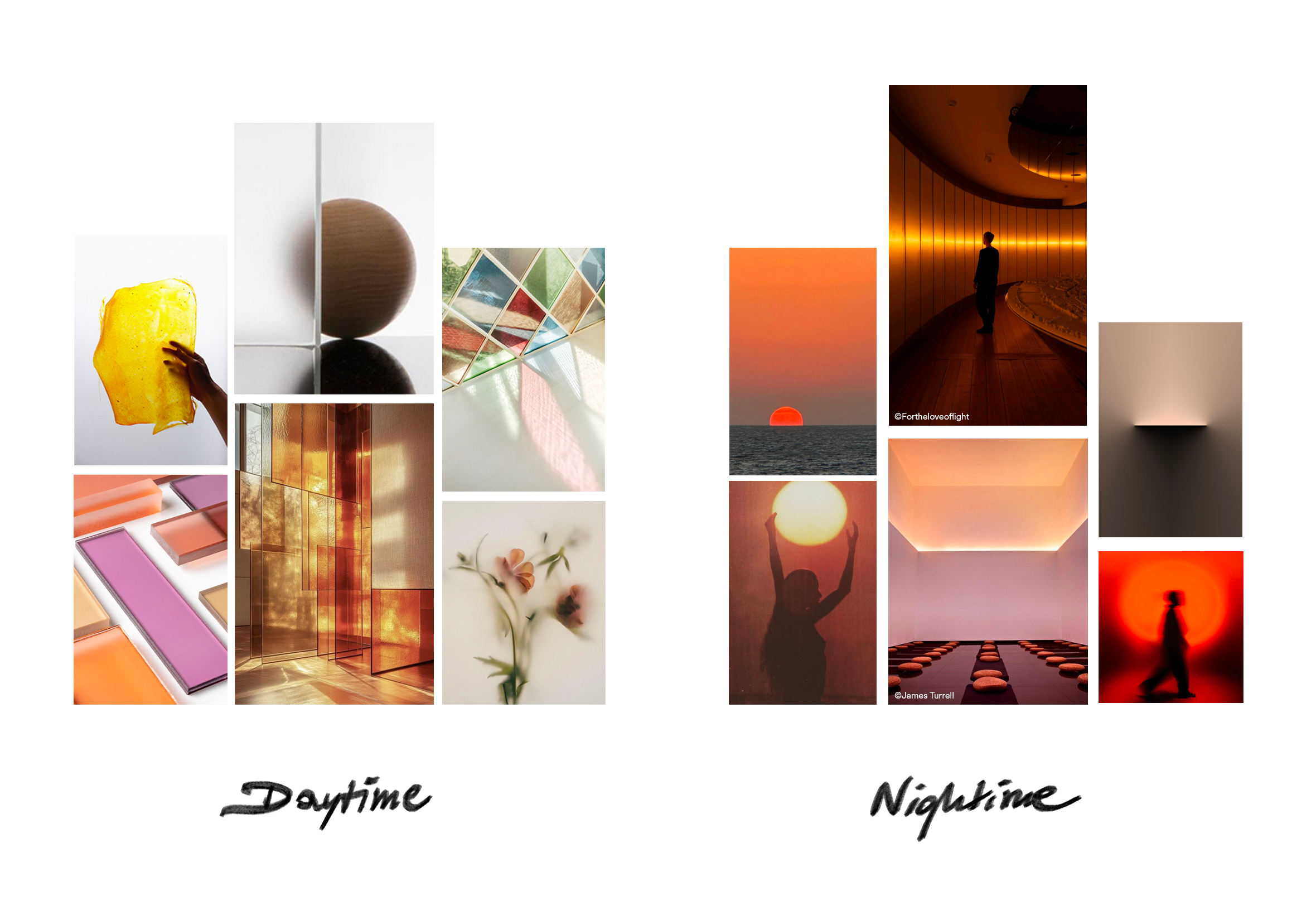
Daytime scenario
- Daylight as the primary source of illumination
- Light entering from above to create vertical gradients and emphasise height
- Filtered light through glazed partitions introducing softness and subtle colour variation
- Bright, open, and visually connected environment supporting activity and movement
Nighttime scenario
- Artificial lighting gradually replaces daylight as the main driver of atmosphere
- Indirect and upward lighting enhancing verticality and spatial depth
- Warmer, dimmed light creating a more intimate and contemplative environment
- Shift from externally defined to internally generated spatial experience
- Focus on task lighting combined with ambient glow to support different user needs
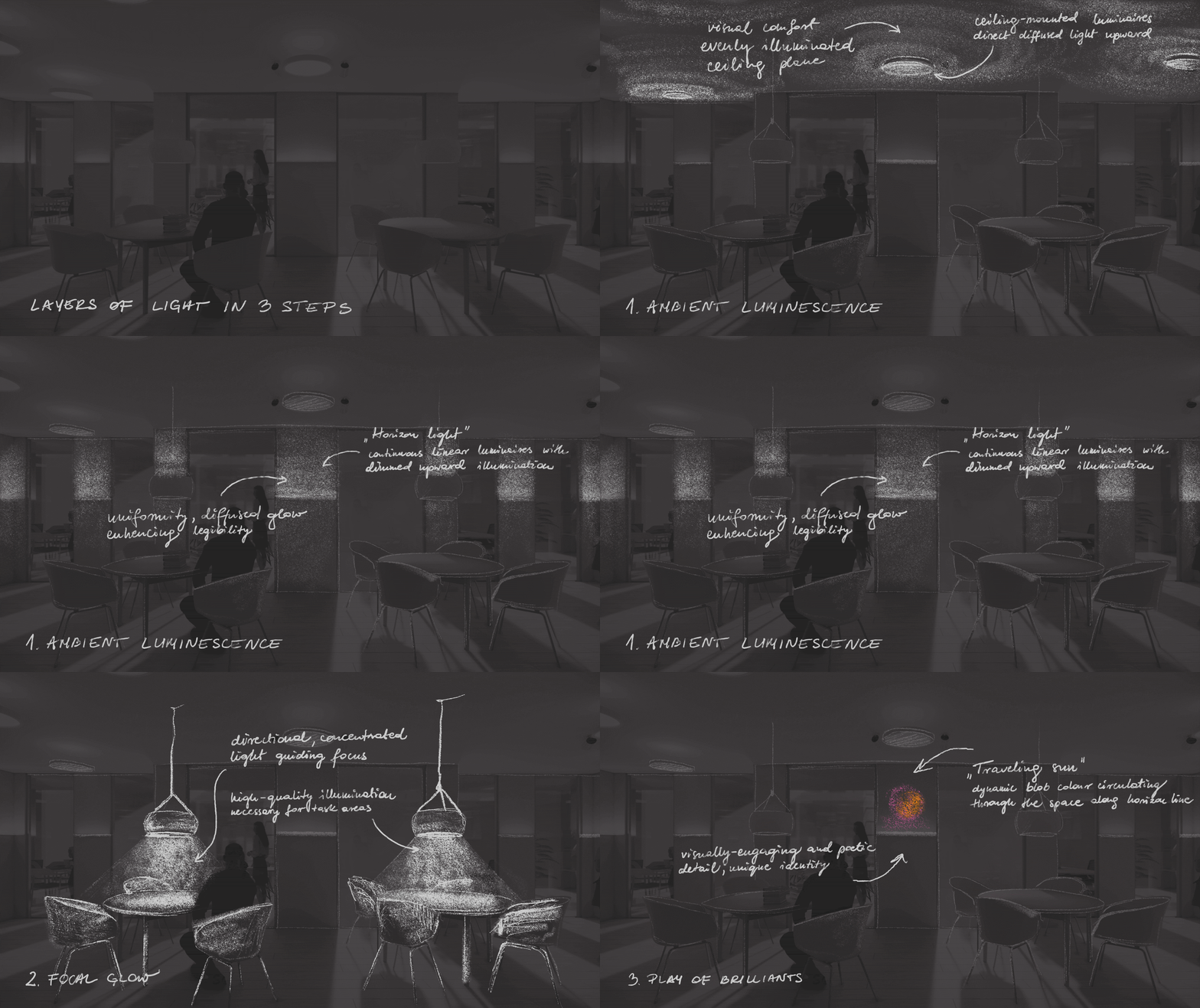
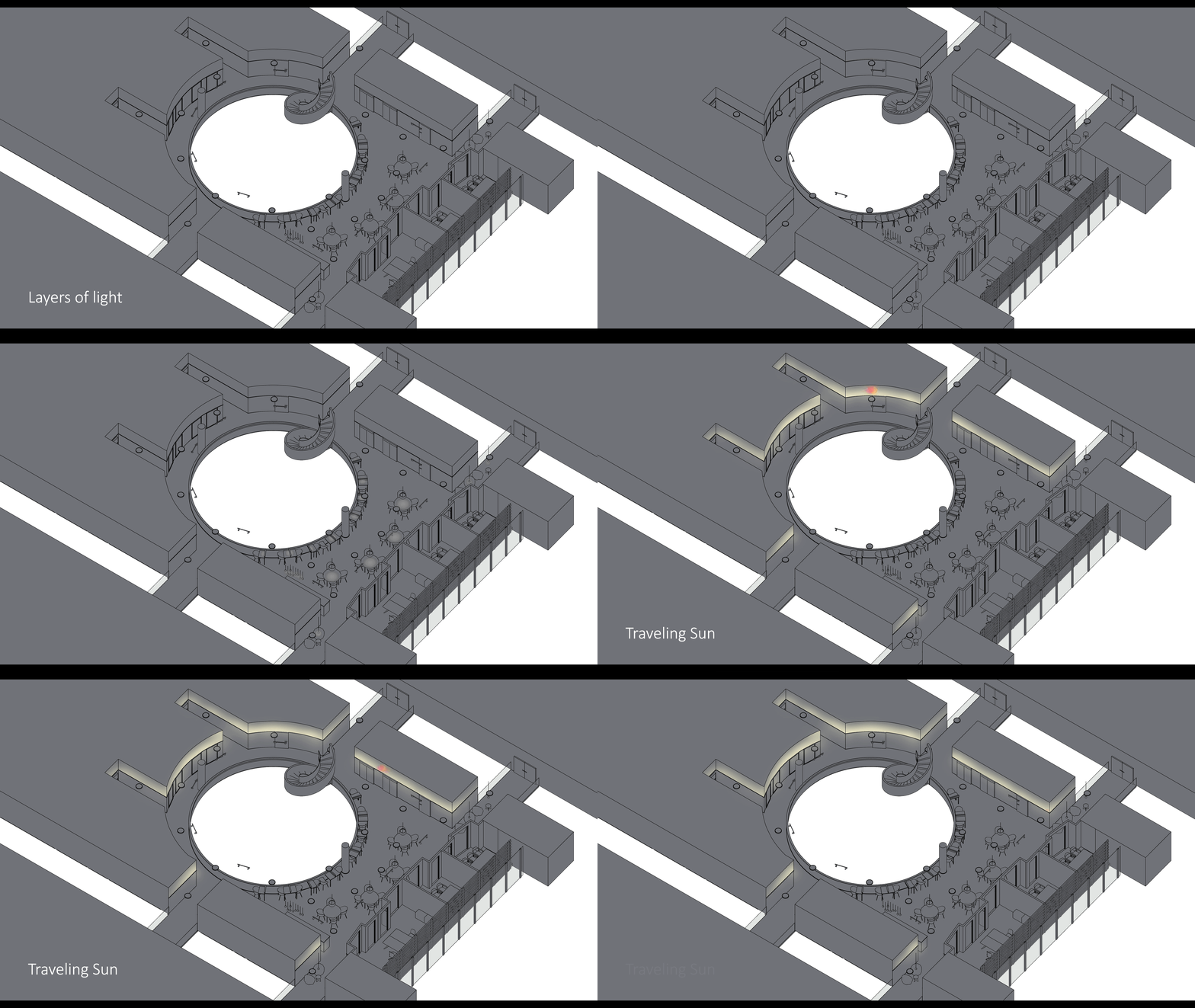
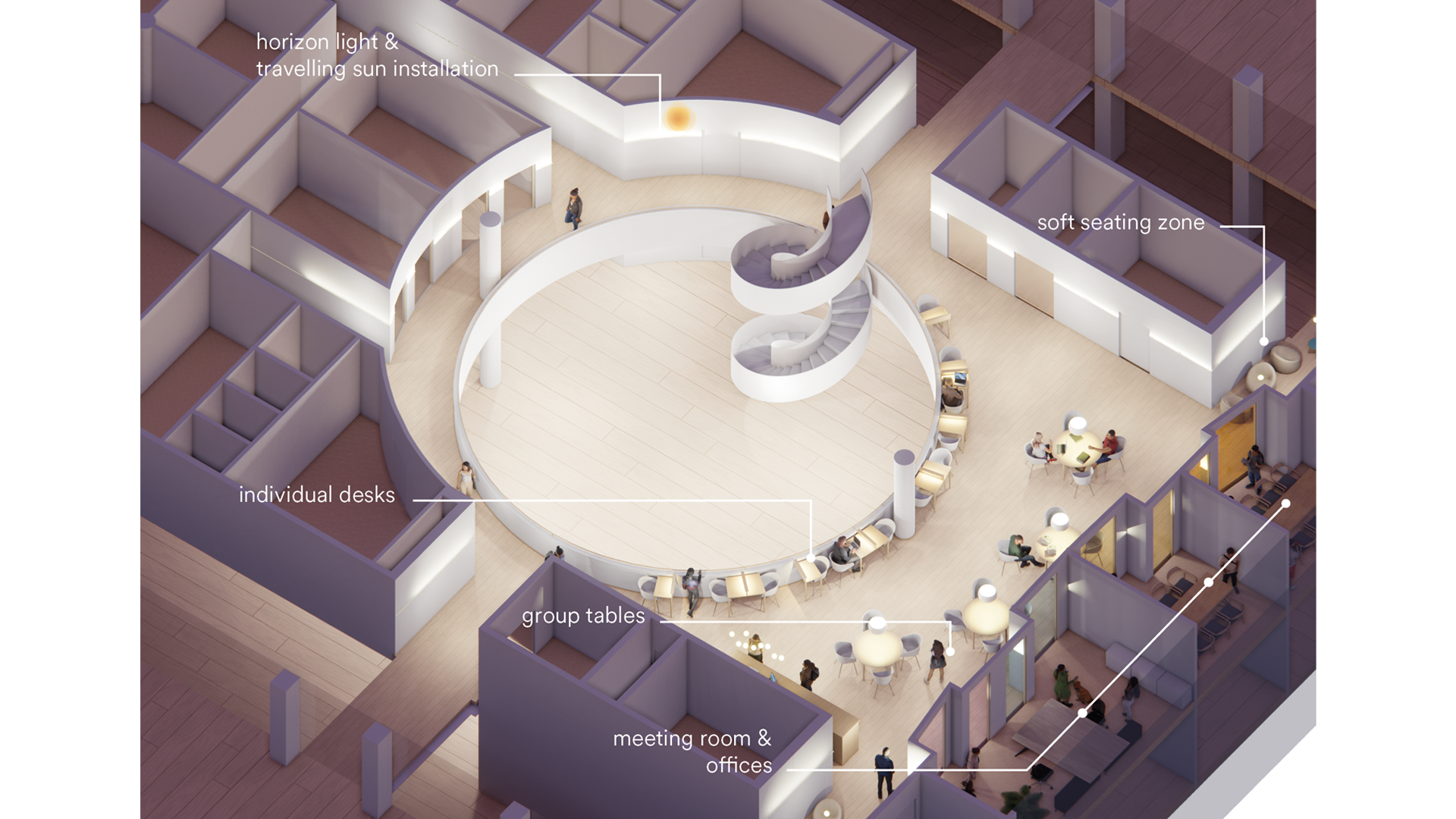
The lighting design is structured in three layers:
- Ambient Luminescence (ceiling and continuous horizon light)
- Focal Glow (pendant lights and desk lamps for task and accent lighting)
- Play of Brilliants (spotlights adding visual interest alongside the horizon light)
The “Horizon Light & Traveling Sun” installation acts as a unifying, poetic lighting concept for the second floor. An upward wall wash defines a continuous “horizon,” while moving coloured spotlights simulate the sun’s path. Operating on a 24-hour cycle, the system turns the atrium into a spatial “clock,” expressing time, season, and sun position—especially when natural sunlight is absent.
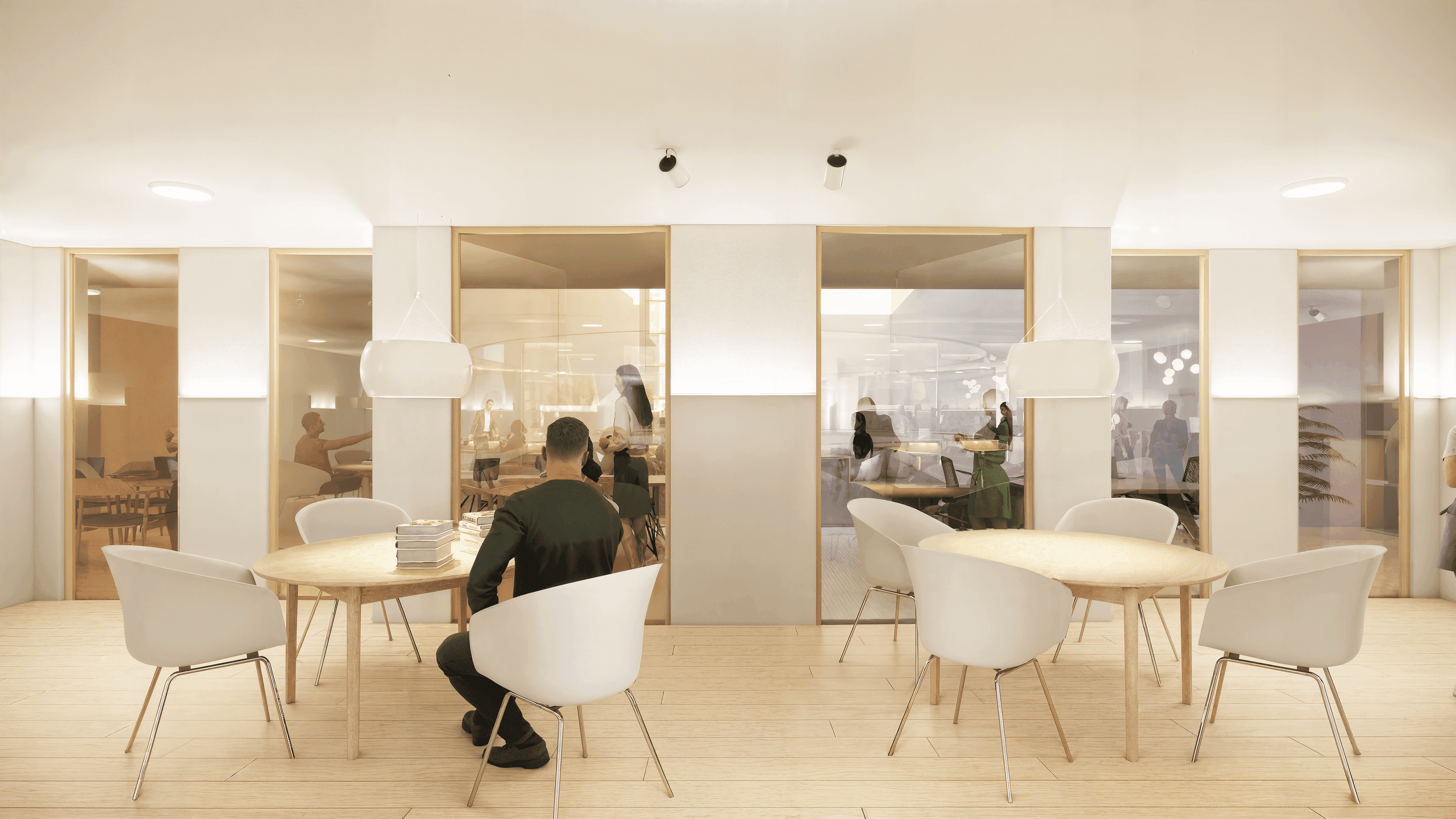
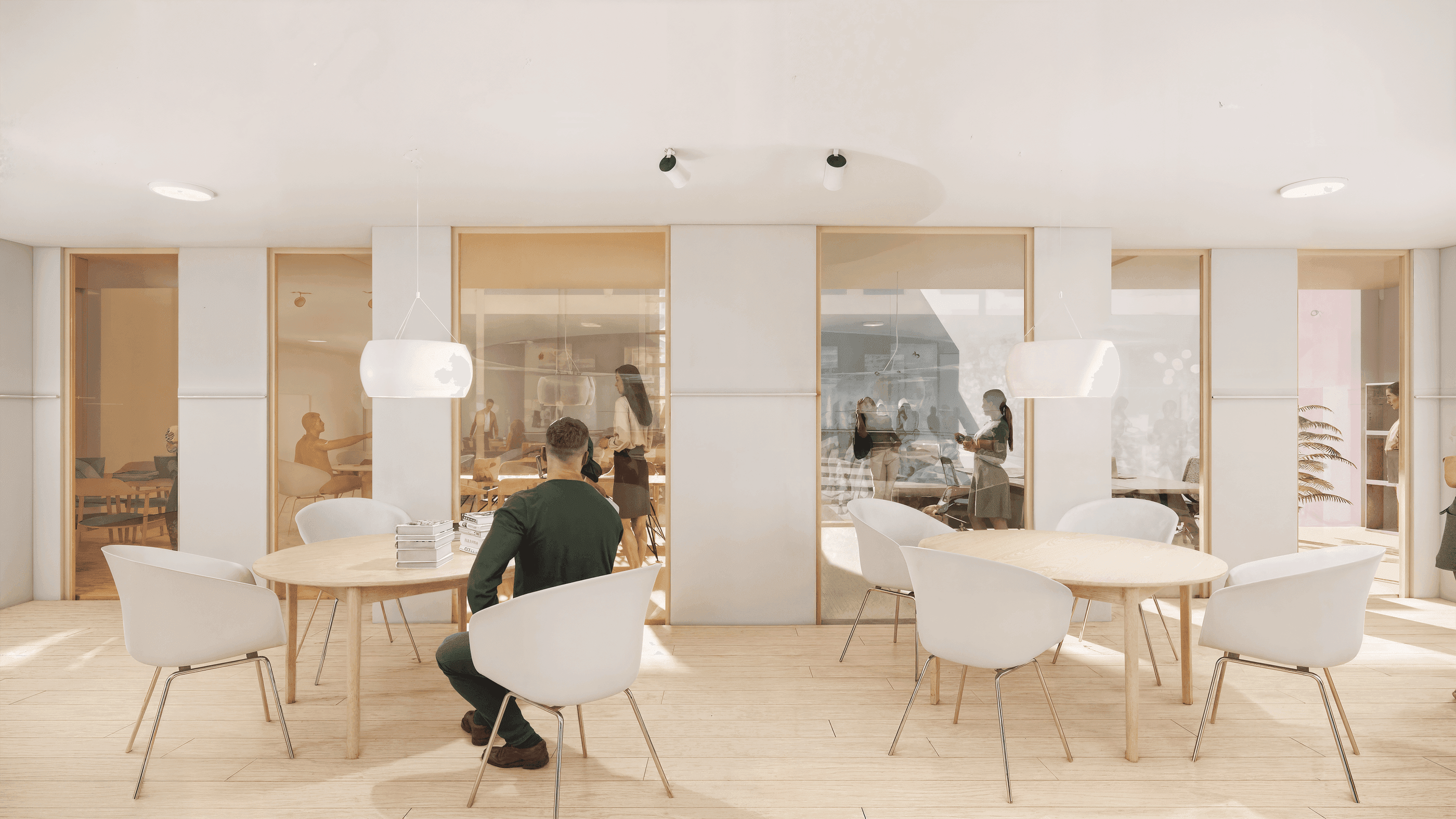
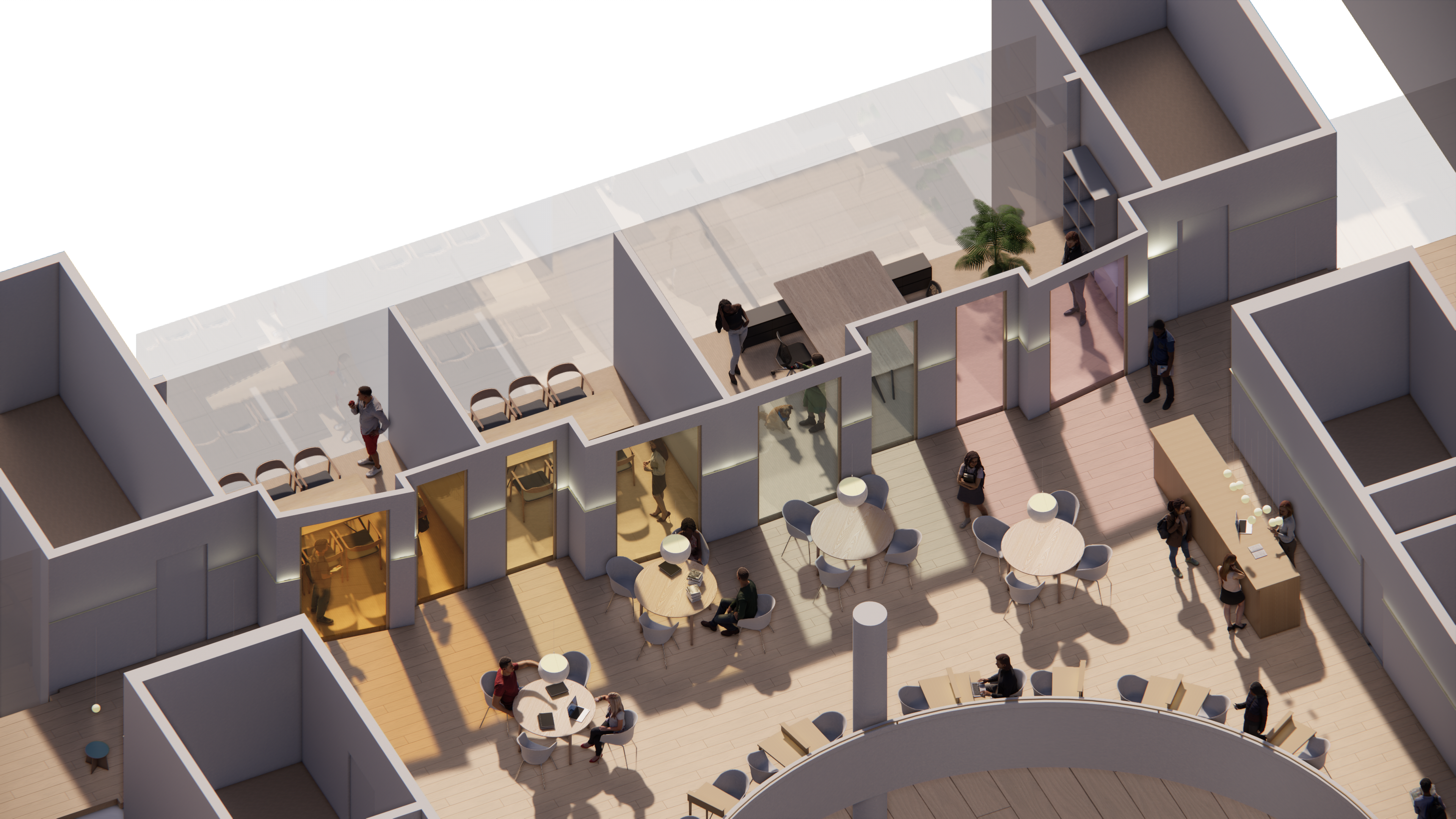
Privacy along the façade is achieved through PDLC glazing, shifting from transparent to opaque to screen views while maintaining soft, diffused daylight. The system also introduces a subtle, stained-glass-like play of light.
Colour becomes an organising tool: warm orange–yellow tones define active zones and encourage energy, while cool blue–purple hues shape quieter areas, supporting focus and calm.
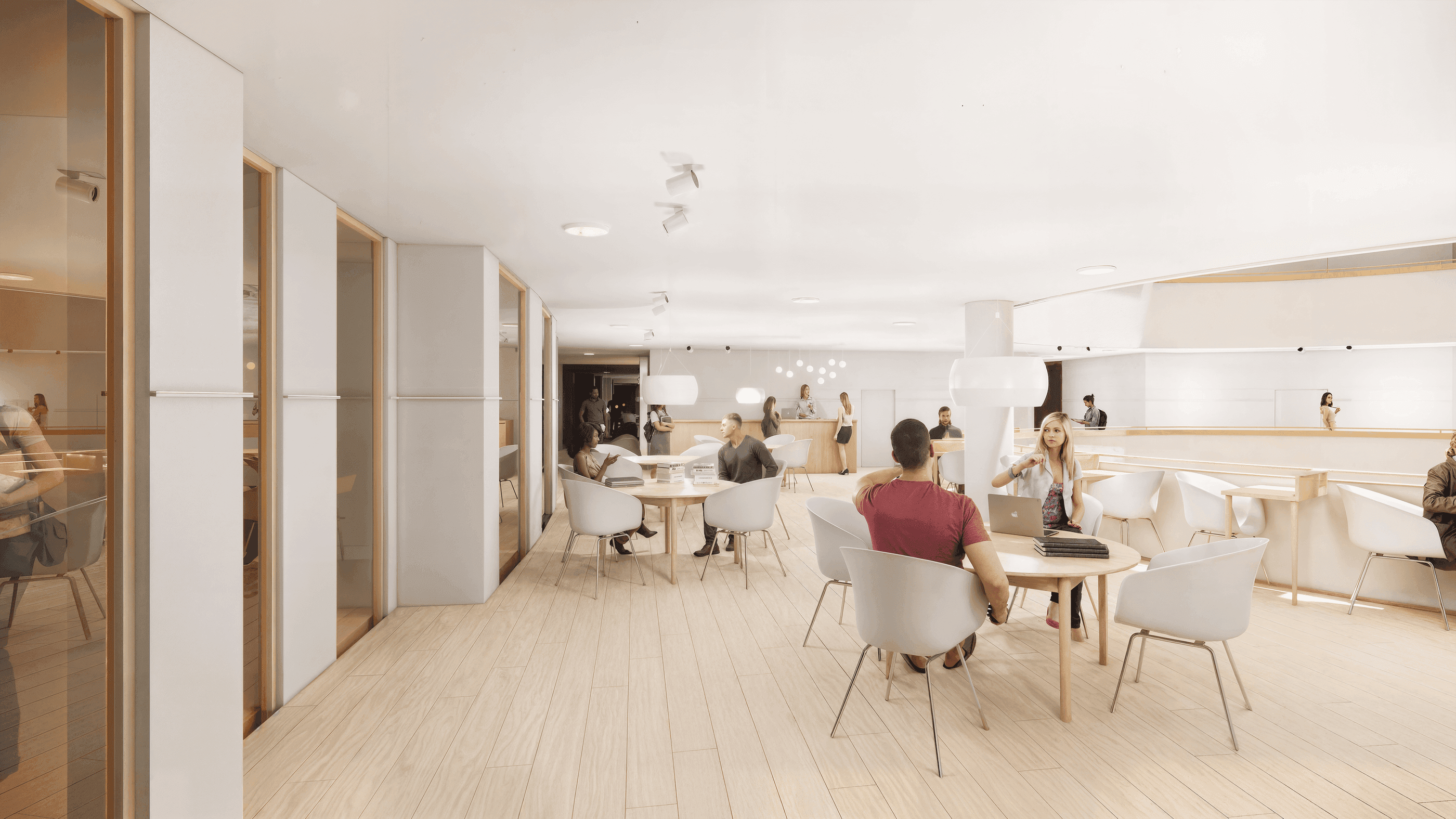
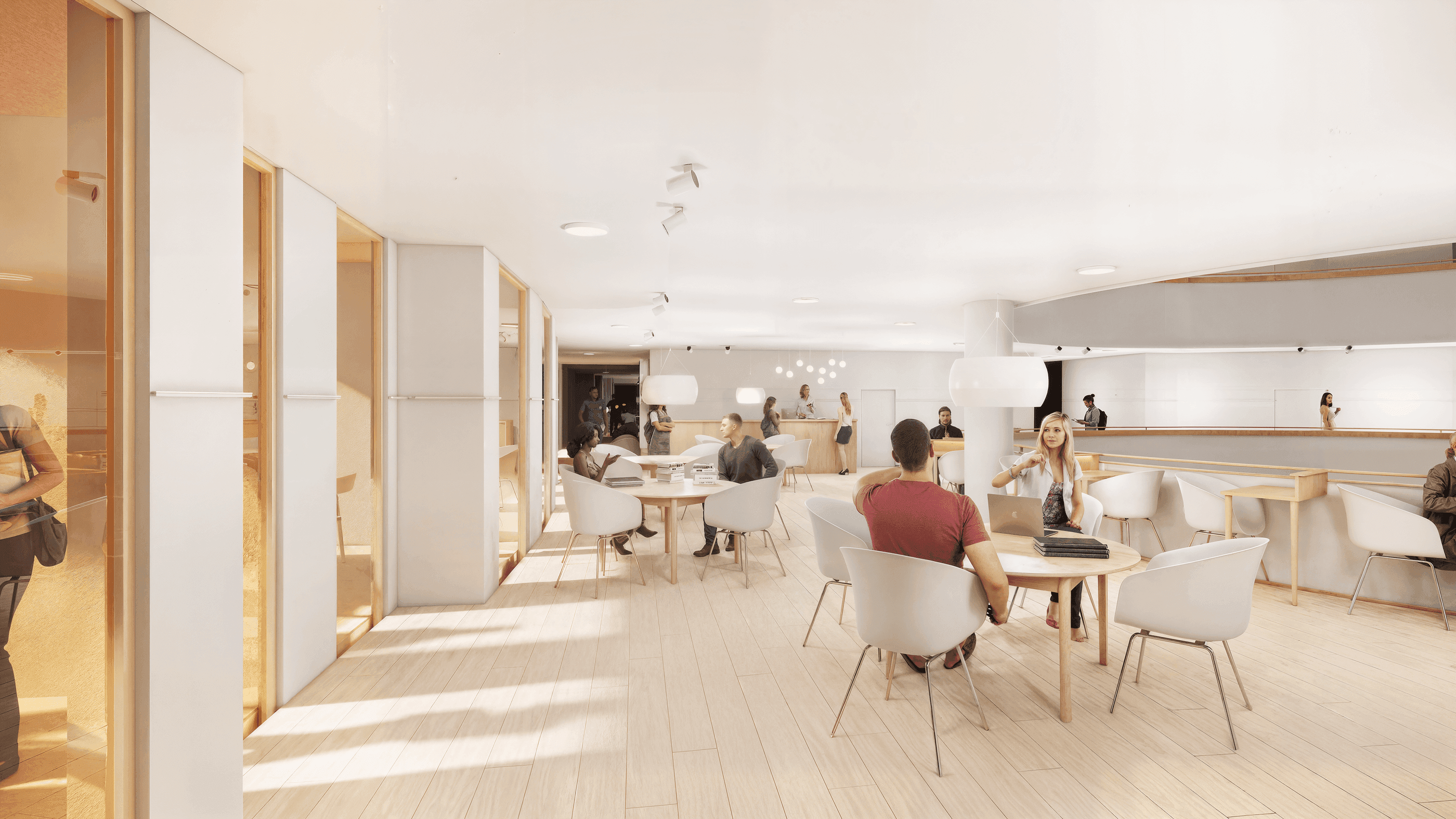
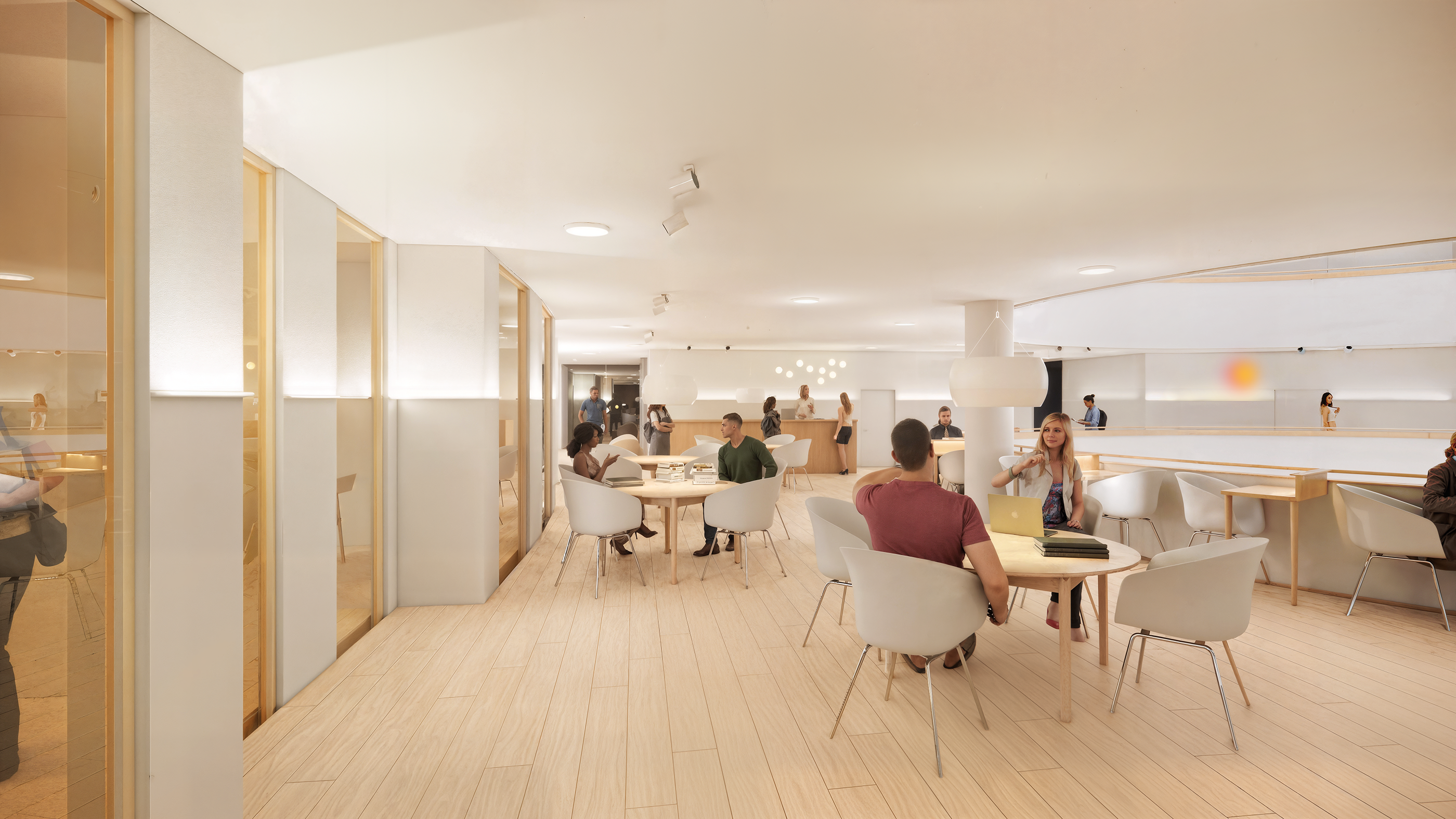
Lighting simulations confirm that the design exceeds the required 500 lx across all task areas while maintaining good uniformity, ensuring both functional visibility and a comfortable environment for users.
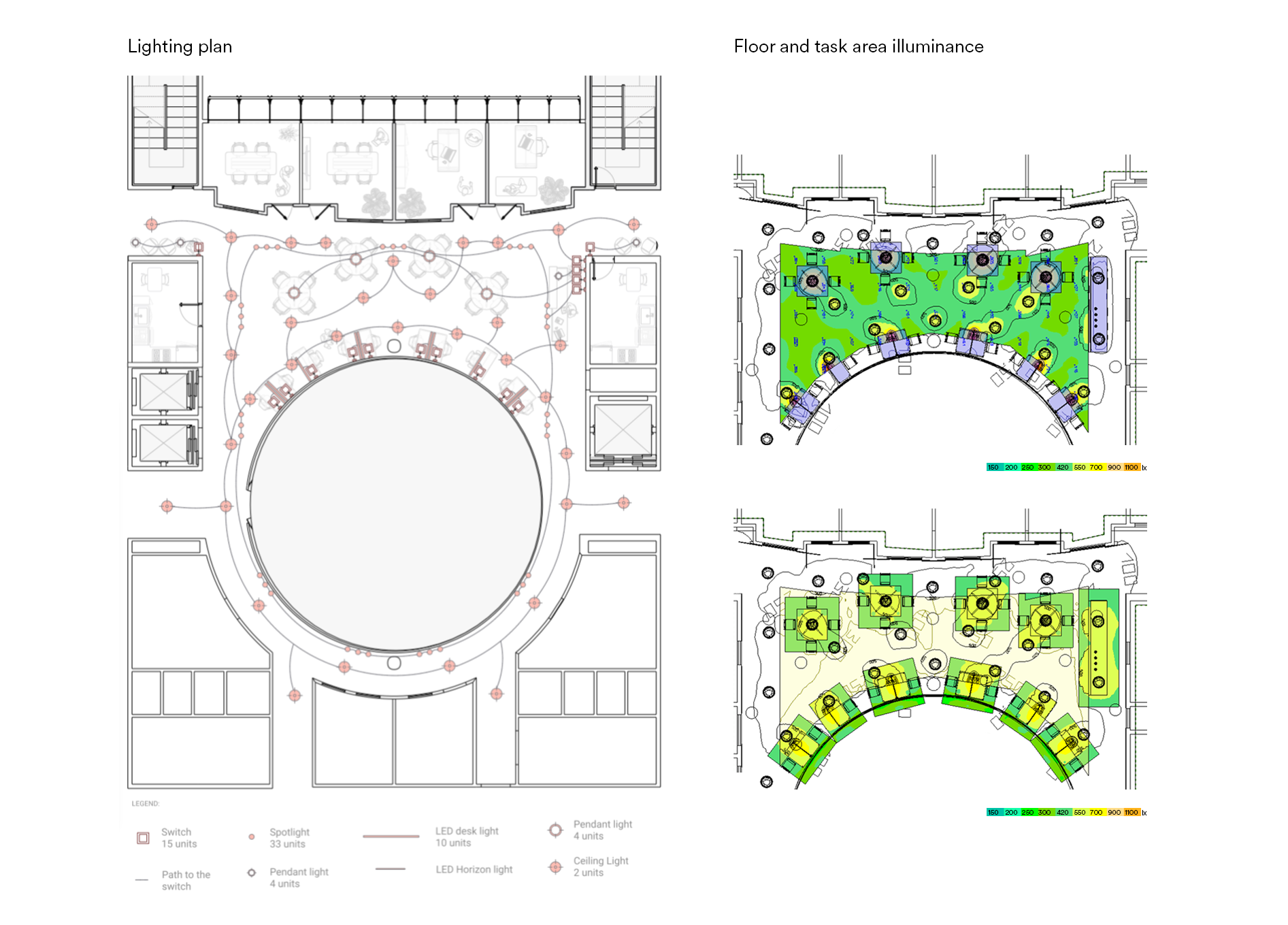
This design solution demonstrates how intentional and dynamic lighting can support individual agency within a collective space, while reinforcing the library's role as a hub for knowledge, reflection, and learning. Lighting becomes a critical tool for spatial transformation, visual identity, and future adaptability.